On May 29, the German Engineering Federation (VDMA) released its Q1 2026 Global Metal Forming Equipment Procurement Trends Report, revealing a 210% year-on-year increase in orders for all-electric press brakes—driven primarily by European new energy vehicle (NEV) battery enclosure and structural component production line upgrades. This development is especially relevant for metal forming equipment manufacturers, precision machining service providers, and global supply chain stakeholders serving the EV battery structural parts segment.
Event Overview
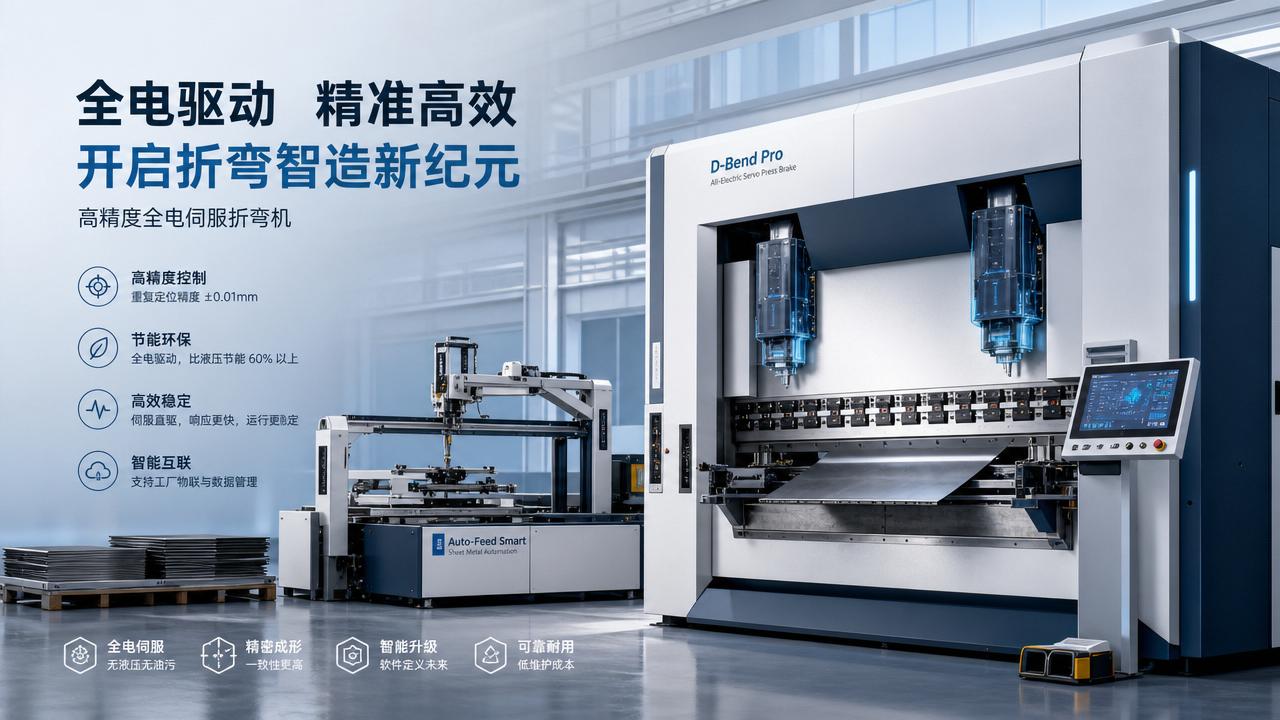
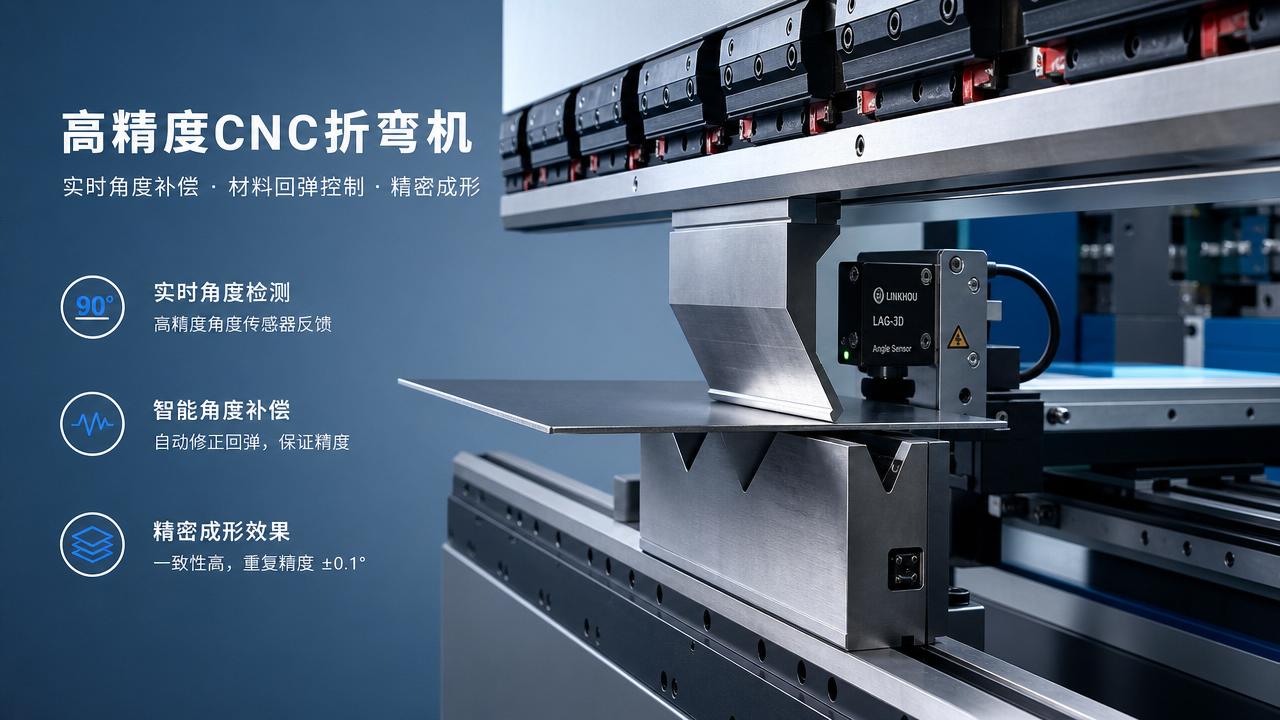
The German Engineering Federation (VDMA) published its Q1 2026 Global Metal Forming Equipment Procurement Trends Report on May 29. The report states that procurement value for all-electric press brakes rose 210% year-on-year in Q1 2026. This growth is attributed to demand from European NEV OEMs upgrading production lines for battery trays and structural components. Of these units, 87% featured ±0.1° real-time angle compensation and EtherCAT synchronization interfaces. Chinese-headquartered manufacturers accounted for 63% of the global incremental volume in this product category.
Impact on Specific Industry Segments
Equipment Manufacturers (OEMs)
Manufacturers of metal forming machinery—particularly those producing all-electric press brakes—are directly affected by shifting specification requirements. The high prevalence (87%) of models with advanced motion control features signals tightening technical thresholds for market entry. Impact manifests in R&D prioritization, certification timelines, and regional compliance alignment.
Precision Machining Service Providers
Contract manufacturers supplying battery tray and structural component machining services face upstream capacity constraints and delivery volatility. As end customers (e.g., Tier 1 battery enclosure suppliers) accelerate adoption of high-precision, synchronized all-electric press brakes, tolerance expectations and process repeatability requirements rise. This affects quoting accuracy, cycle time validation, and quality documentation protocols.
Global Supply Chain & Distribution Partners
Distributors and channel partners handling press brake components—including servo drives, EtherCAT-enabled controllers, and precision tooling—see demand shifts toward higher-specification subassemblies. The 63% share held by Chinese manufacturers in the incremental volume suggests evolving logistics routing, regional inventory planning, and after-sales support localization needs.
What Relevant Enterprises or Practitioners Should Focus On Now
Monitor VDMA’s upcoming methodology updates and regional breakdowns
The current report highlights aggregate figures but does not specify country-level procurement distribution beyond China’s share of incremental volume. Future releases may clarify regional deployment patterns (e.g., Germany vs. Hungary vs. Spain), which will inform localized sales and service investment decisions.
Track specification convergence in high-growth subcategories
With 87% of newly ordered all-electric press brakes featuring ±0.1° real-time angle compensation and EtherCAT interfaces, this configuration is emerging as a de facto benchmark—not just an option. Procurement teams and integrators should treat these features as baseline requirements when evaluating quotations or validating machine readiness for battery structural part programs.
Distinguish between order volume and actual installation/production ramp timelines
The 210% order growth reflects procurement commitments, not necessarily immediate commissioning. Analysis shows lead times for high-spec all-electric press brakes remain extended (typically 6–9 months). Stakeholders should align internal capacity planning and project scheduling accordingly—not assuming rapid deployment parity with order timing.
Assess implications for spare parts and service infrastructure
As EtherCAT-integrated, high-precision systems proliferate, maintenance workflows shift toward network-aware diagnostics and firmware-aligned calibration. Current more suitable understanding is that field service teams require updated training and diagnostic tooling—not just mechanical expertise—to support this equipment class effectively.
Editorial Perspective / Industry Observation
Observably, this VDMA data point functions less as a completed market transition and more as a leading indicator of tightening technical expectations across EV battery structural manufacturing. The concentration of advanced specifications (±0.1° compensation + EtherCAT) in the majority of new orders suggests standardization is accelerating—not merely diversification. From an industry perspective, the 63% contribution from Chinese manufacturers to global incremental volume reflects both expanded export capability and growing integration into European Tier 1 supplier ecosystems. However, it does not imply uniform technological parity across vendors; differentiation remains concentrated in system-level integration reliability and long-term process stability—not just feature checklists.
Current more suitable understanding is that this trend marks the beginning of a specification-driven consolidation phase in the all-electric press brake segment—where compliance with next-generation battery structural part tolerances becomes a gatekeeper function for participation in key EV supply chains.
Overall, the VDMA’s Q1 2026 procurement data underscores a measurable acceleration in the adoption of high-precision, digitally synchronized metal forming equipment within the NEV battery structural component value chain. Its significance lies not in isolated growth figures, but in the convergence of technical requirements—and the resulting pressure on capability alignment across equipment, service, and integration layers. At present, the data is best interpreted as a directional signal confirming ongoing technical escalation, rather than evidence of fully matured market conditions.
Source: German Engineering Federation (VDMA), Q1 2026 Global Metal Forming Equipment Procurement Trends Report, published May 29, 2026.
Note: Regional procurement breakdowns beyond China’s incremental share, and final Q1 2026 installation/commissioning rates, remain pending further official disclosure.
Product Recommendations
 Abrasive Delivery SystemsIndustrial Waterjet Cutters: Abrasive Costs That Erode MarginsAnalyst :5-Axis Machining Scientist
 All-Electric Press BrakesAll-Electric Servo Drives: Energy Savings vs Upgrade CostAnalyst :Precision Turning Architect
 All-Electric Press BrakesReal-Time Angle Compensation: What It Fixes and What It Doesn'tAnalyst :Precision Turning Architect
 Latest Sector NewsHigh-Strength Steel Machining: Tool Life Myths to AvoidAnalyst :Dr. Alistair Vaughn
 3D 5-Axis LaserComposite Material Cutting Without Delamination: Key MethodsAnalyst :
 Robotic Bending CellsAutomated Sheet Metal Forming: Hidden Setup Costs ComparedAnalyst :Precision Turning Architect