In high-strength steel machining, tool life is often blamed on the workpiece material first. That assumption sounds practical on the shop floor, but it frequently hides the real causes of premature wear, chipping, thermal damage, and unstable surface quality. In reality, high-strength steel machining performance depends on a tightly linked system: tool substrate, edge preparation, cutting data, machine rigidity, workholding, coolant delivery, and toolpath behavior. When one variable is weak, tool life drops fast—regardless of how advanced the insert grade may be. This article explains the most common myths to avoid and provides a practical framework for improving consistency, reducing unplanned tool changes, and making better decisions in demanding metal cutting environments.
Why a structured evaluation matters in high-strength steel machining
High-strength steel machining is used across general industry applications, from structural components and precision shafts to EV parts, safety-critical brackets, molds, and fabricated assemblies. These materials offer strength, toughness, and fatigue resistance, but they also create concentrated heat, high cutting forces, and greater sensitivity to instability. That is why relying on one simple explanation—“the steel is too hard”—usually leads to the wrong fix.
A structured evaluation helps separate myth from measurable cause. It reduces random parameter changes, protects spindle time, and improves repeatability across CNC lathes, machining centers, and flexible production lines. In high-strength steel machining, the best results usually come from disciplined checks rather than aggressive experimentation.
The most useful high-strength steel machining checklist
Use the following points before blaming the material for poor tool life in high-strength steel machining. Each item addresses a failure source that is often overlooked.
- Confirm whether wear is flank wear, crater wear, notch wear, chipping, or plastic deformation before changing speed, feed, or insert grade.
- Check actual spindle load and vibration trends, because machine instability often shortens tool life more than material hardness alone.
- Verify tool overhang, holder runout, and clamping rigidity, especially in interrupted cuts or deep-reach high-strength steel machining operations.
- Review edge preparation and nose radius selection, since overly sharp or overly large edges can both fail under heavy cutting forces.
- Match coating and carbide substrate to heat generation, not just tensile strength, because thermal load drives many premature failures.
- Measure chip shape and evacuation quality, as recutting chips can destroy surfaces and accelerate localized edge damage.
- Evaluate coolant pressure, direction, and consistency, because poor delivery creates thermal shock or leaves the cutting zone overheated.
- Inspect entry and exit toolpath behavior, since impact loading at corners, holes, and shoulders often causes edge breakage.
- Confirm the workholding setup is not flexing under load, particularly with thin-wall or long-format parts made from tough steel grades.
- Separate tool life data by operation type—roughing, semi-finishing, finishing—because one insert strategy rarely fits every stage.
- Compare programmed versus actual cutting speed on changing diameters, especially on CNC lathes where surface speed may fluctuate sharply.
- Review batch-to-batch material variation, including scale, inclusions, and heat treatment condition, before standardizing any corrective action.
Tool life myths to avoid
Myth 1: High-strength steel machining always needs slower cutting speed
Lower speed is not automatically safer. In some high-strength steel machining operations, reducing speed too much increases contact time, raises friction, worsens built-up edge, and produces erratic chip flow. The result can be worse surface finish and shorter tool life. Speed must be balanced with feed, depth of cut, insert geometry, and cooling strategy. The right answer is often stable heat management, not simply lower RPM.
Myth 2: The hardest insert grade will last the longest
Hardness alone does not guarantee durability. In high-strength steel machining, brittle grades can chip quickly when facing interrupted cuts, scale, or vibration. A slightly tougher substrate with appropriate coating may outperform a harder grade in real production. Tool life depends on the balance between wear resistance and fracture resistance, especially when machine conditions are less than perfect.
Myth 3: Coolant always improves tool life
Coolant can help, but inconsistent application can also create thermal shock. In high-strength steel machining, a weak or poorly aimed coolant stream may repeatedly heat and quench the cutting edge, causing microcracks and chipping. In some operations, stable dry cutting or properly delivered high-pressure coolant performs better than intermittent flood coolant. What matters is consistency at the cutting zone.
Myth 4: If the edge fails, feed rate is too high
Feed is only one variable. Edge failure in high-strength steel machining may come from poor entry angle, spindle vibration, excessive runout, poor chip evacuation, or workpiece movement. Reducing feed without diagnosing the actual mechanism often hides the symptom while reducing productivity. Wear pattern analysis should come first, then parameter correction.
Myth 5: One proven setup should work for every steel part
Even within the same family of high-strength steels, machinability changes with heat treatment, section thickness, scale condition, geometry, and interrupted features. A setup that works on a solid cylindrical part may fail on a welded blank or thin-wall profile. High-strength steel machining must be adjusted according to part behavior, not just material label.
Application-specific checks that change the outcome
Turning shafts, pins, and cylindrical components
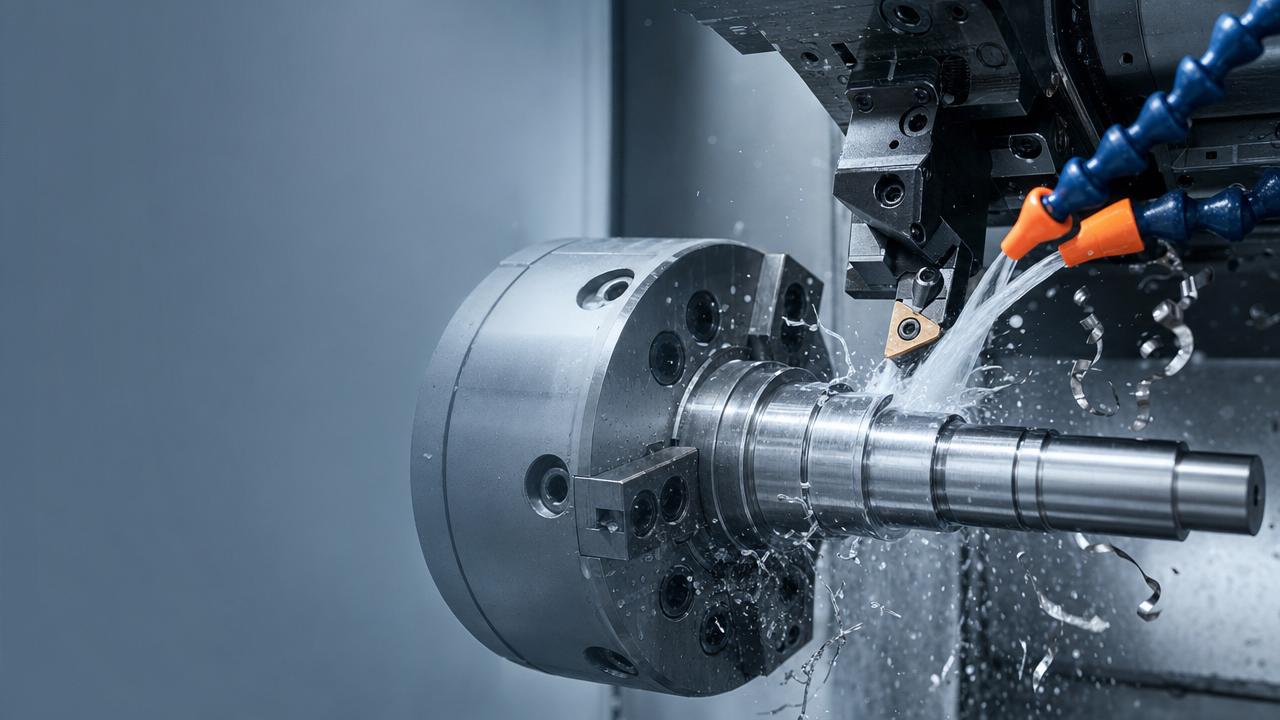
In CNC lathe work, high-strength steel machining often suffers from changing cutting speed across the diameter, especially during facing and profiling. Constant surface speed settings should be verified against machine response and chuck stability. It is also important to inspect tailstock support, insert seating, and chip control near shoulders.
Long parts require extra attention to deflection. If vibration appears at certain lengths, the issue may be dynamic instability rather than insert failure. Adjusting support strategy, tool nose radius, and engagement pattern often delivers better results than simply changing insert grade.
Milling structural parts and pockets
In milling, high-strength steel machining benefits from smoother engagement and controlled radial step-over. Sharp corners, full-width entry, and abrupt direction changes increase thermal and mechanical shock. Dynamic toolpaths, proper arc entries, and reduced tool overhang can significantly extend cutter life.
For multi-axis machining of complex features, machine kinematics also matter. If the spindle or rotary axis loses stiffness in certain positions, tool wear may spike only in specific toolpath zones. This is why advanced machining centers need data review beyond simple feed-and-speed tables.
Machining pre-formed or heat-treated components
Pre-formed blanks, forged parts, and heat-treated components introduce extra variability in high-strength steel machining. Surface scale, decarburized layers, and hardness gradients create localized impact loads. The first passes may require more robust edge preparation and different engagement strategy than later finishing passes.
If tool life varies widely from part to part, inspect incoming stock condition before changing the cutting program. Material consistency is often a hidden driver of cost in batch production.
Commonly ignored risks in high-strength steel machining
Runout that looks “acceptable” on paper: Small runout values can still overload one flute or one insert corner. In high-strength steel machining, uneven load distribution quickly becomes visible as asymmetric wear and unstable finish.
Incorrect focus on average tool life: Average life may look reasonable while variation remains too high for reliable planning. Tool life consistency is often more valuable than one peak result because it supports stable cycle times and predictable quality.
Ignoring machine thermal behavior: Warm-up condition, spindle growth, and axis compensation can influence contact conditions in high-strength steel machining, especially on close-tolerance work. Wear trends should be compared across cold-start and steady-state production.
Using the same strategy for roughing and finishing: Roughing seeks secure material removal; finishing needs edge integrity and dimensional control. When one compromise setup is used for both, neither tool life nor quality is optimized.
Changing too many variables at once: If speed, feed, coolant, insert grade, and toolpath are all changed together, the root cause remains unclear. Controlled trials are essential for meaningful improvement.
Practical steps to improve results
- Document the exact wear mode with photos after each test run.
- Change only one primary variable per trial and record the outcome.
- Measure holder runout and verify clamping repeatability before parameter changes.
- Separate roughing, semi-finishing, and finishing into different optimization windows.
- Review chip color, chip form, spindle load, and surface finish together.
- Reassess coolant direction whenever wear appears localized on one edge.
- Use stable toolpath transitions to reduce impact loading at entry and exit.
- Compare performance across material batches before standardizing a new setup.
FAQ about high-strength steel machining and tool life
What is the biggest mistake in high-strength steel machining?
The biggest mistake is assuming the material itself is the main problem without checking setup rigidity, wear mode, and coolant behavior. Tool life failures are often system failures, not material-only failures.
How can tool life be improved quickly?
The fastest gains usually come from improving stability: reduce overhang, correct runout, stabilize coolant delivery, and refine entry conditions. These steps often outperform immediate changes to insert grade.
Is high-pressure coolant necessary for high-strength steel machining?
Not always. It is highly beneficial in many cases, especially where chip evacuation is difficult, but consistent delivery matters more than pressure alone. Poorly applied coolant can reduce tool life rather than improve it.
Conclusion and next actions
High-strength steel machining does not have to mean unpredictable tool wear or constant compromise. The most expensive myth is the belief that short tool life is simply the price of machining a tough material. In practice, tool life is shaped by process control: machine condition, holder accuracy, insert design, coolant strategy, workholding, and toolpath stability.
A better next step is to audit one unstable operation using the checklist above. Identify the wear mode, isolate one variable, validate the mechanical setup, and compare results by operation stage. This disciplined approach improves high-strength steel machining performance more reliably than guesswork. For advanced manufacturing environments focused on precision, repeatability, and smarter metal cutting decisions, that shift from assumption to evidence is where real productivity starts.
Product Recommendations
 Abrasive Delivery SystemsIndustrial Waterjet Cutters: Abrasive Costs That Erode MarginsAnalyst :5-Axis Machining Scientist
 All-Electric Press BrakesAll-Electric Servo Drives: Energy Savings vs Upgrade CostAnalyst :Precision Turning Architect
 All-Electric Press BrakesReal-Time Angle Compensation: What It Fixes and What It Doesn'tAnalyst :Precision Turning Architect
 Latest Sector NewsHigh-Strength Steel Machining: Tool Life Myths to AvoidAnalyst :Dr. Alistair Vaughn
 3D 5-Axis LaserComposite Material Cutting Without Delamination: Key MethodsAnalyst :
 Robotic Bending CellsAutomated Sheet Metal Forming: Hidden Setup Costs ComparedAnalyst :Precision Turning Architect