
On May 19, 2026, the U.S. International Trade Commission (ITC) issued a final determination in Investigation No. TA-1455, imposing a general exclusion order (GEO) on Wi-Fi dimmer switches and related smart control modules manufactured by a Shenzhen-based Chinese enterprise that failed to appear in the Section 337 investigation. The ruling affects the entire U.S. import chain for downstream products incorporating these components—including smart laser power controllers and remote I/O modules for waterjet systems—marking a significant development in trade compliance requirements for intelligent building and industrial automation hardware.
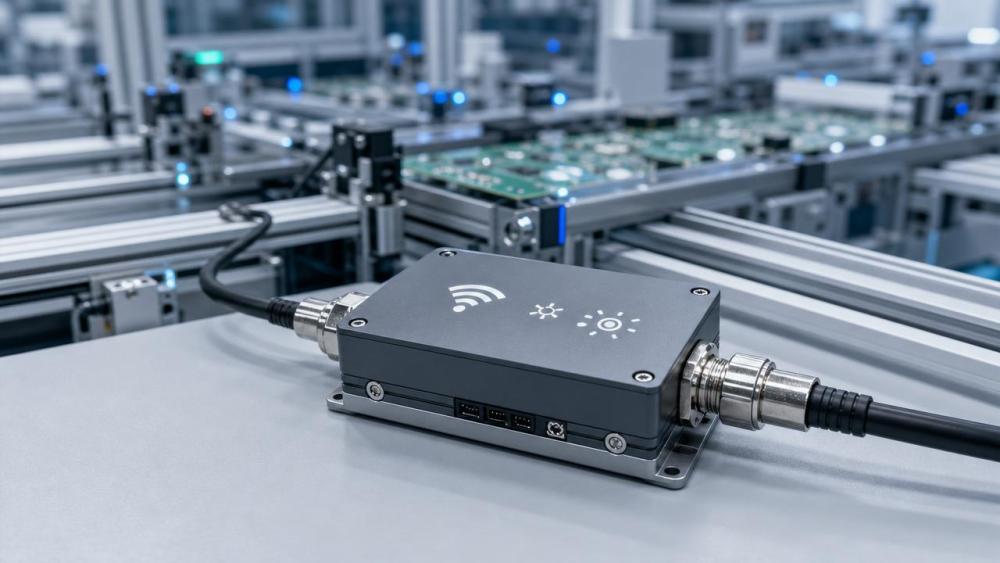
Final ITC Determination in TA-1455
On May 19, 2026, the U.S. International Trade Commission (ITC) concluded its Section 337 investigation (TA-1455) with a final determination. The ITC found that a Shenzhen-based Chinese company did not participate in the proceedings. As a result, the Commission issued a general exclusion order (GEO) against its Wi-Fi-enabled dimmer switches and other smart lighting control modules. Under this order, all articles imported into the United States that contain these components—including integrated devices such as smart laser power controllers and waterjet remote I/O modules—are prohibited from entry, regardless of importer or origin point.
Supply Chain Impact Across Business Roles
Direct Exporters and Distributors
Companies exporting finished goods containing the subject modules face immediate customs detention or refusal at U.S. ports. Even if the end product is assembled outside China, inclusion of the excluded components triggers the GEO. Affected firms must now review bill-of-materials (BOM) traceability and verify component sourcing across tiers.
Raw Material and Component Procurement Firms
Procurement organizations supplying electronic subassemblies or PCB-level modules must reassess supplier qualification criteria. The GEO underscores the need for documented evidence of component origin, design ownership, and freedom-to-operate status—not just CE or FCC declarations.
Contract Manufacturers and OEMs
Manufacturers producing under private label or white-label arrangements are exposed to secondary liability. If their production lines incorporate the excluded modules—even as part of standardized reference designs—they risk shipment rejection. Revalidation of technical documentation and firmware provenance is now essential.
Logistics and Trade Compliance Service Providers
Customs brokers, freight forwarders, and compliance consultants must update screening protocols to flag not only HS codes but also embedded component identifiers (e.g., model numbers, firmware versions). Automated tariff classification tools alone are insufficient; granular BOM-level due diligence is now required.
Key Compliance Priorities for Affected Enterprises
Component-Level Export Compliance Review
Enterprises must conduct immediate audits of all smart control modules used in U.S.-bound products—not limited to those branded or sourced from Shenzhen. This includes verifying whether any module shares functional, firmware, or architectural similarities with those cited in TA-1455.
Technical Documentation and Traceability Enhancement
Firms should compile and retain full lifecycle documentation for critical components: schematic diagrams, firmware build logs, supplier declarations of non-infringement, and third-party test reports confirming independent design. Such records may serve as mitigation evidence in future investigations.
Supplier Qualification and Dual-Sourcing Strategy
Reliance on single-source suppliers for core connectivity modules (e.g., Wi-Fi, Bluetooth LE) carries heightened regulatory risk. Diversifying across certified alternative vendors—and validating interoperability without redesign—is now a strategic priority.
U.S. Market Entry Risk Assessment
Before launching new smart industrial or building automation products in the U.S., companies should proactively engage qualified ITC counsel to assess potential exposure under existing or pending Section 337 investigations—not only for patents, but also for trade secret misappropriation or copyright claims involving firmware or UI code.
Industry Observation: Rising Thresholds for Embedded Intelligence
Analysis shows that Section 337 enforcement is shifting focus from end-product branding to embedded subsystems—particularly those enabling wireless connectivity, adaptive control logic, or cloud-linked functionality. Observably, the ITC’s willingness to issue GEOs based on component-level non-participation reflects a broader trend: regulatory scrutiny now targets technical building blocks rather than just final assemblies. It is more appropriate to understand this as an acceleration in the formalization of ‘compliance-by-design’ expectations across global electronics supply chains. What deserves closer attention is how rapidly manufacturers must now integrate legal review into early-stage R&D—not merely at the pre-certification or pre-shipment stage.
Taking Stock: Beyond a Single Case
This determination is not merely about one company or one module family. It signals a structural tightening in how U.S. trade authorities treat intelligent components in regulated sectors—from industrial controls to smart infrastructure. Rational industry response requires moving beyond reactive compliance toward embedded governance: integrating IP clearance, export control screening, and supply chain transparency into core engineering workflows. While the immediate impact is bounded to specific product categories, the precedent sets a higher bar for due diligence across the intelligent hardware ecosystem.
Source Information and Ongoing Monitoring
This article was generated exclusively from the user-provided information: title, event date (May 19, 2026), and factual summary of the ITC’s final determination in TA-1455. Specific official source links were not provided in the input and should be verified continuously. Stakeholders are advised to monitor updates from the U.S. ITC, U.S. Customs and Border Protection (CBP), and official Federal Register notices regarding implementation guidance, enforcement scope clarifications, and potential amendments to the GEO. Continued observation is recommended for related developments in procurement specifications, industry association advisories, and follow-up rulings in parallel investigations.
Product Recommendations
 Abrasive Delivery SystemsIndustrial Waterjet Cutters: Abrasive Costs That Erode MarginsAnalyst :5-Axis Machining Scientist
 All-Electric Press BrakesAll-Electric Servo Drives: Energy Savings vs Upgrade CostAnalyst :Precision Turning Architect
 All-Electric Press BrakesReal-Time Angle Compensation: What It Fixes and What It Doesn'tAnalyst :Precision Turning Architect
 Latest Sector NewsHigh-Strength Steel Machining: Tool Life Myths to AvoidAnalyst :Dr. Alistair Vaughn
 3D 5-Axis LaserComposite Material Cutting Without Delamination: Key MethodsAnalyst :
 Robotic Bending CellsAutomated Sheet Metal Forming: Hidden Setup Costs ComparedAnalyst :Precision Turning Architect