How Industrial Automation Improves OEE in High-Mix, Low-Volume Manufacturing
In high-mix, low-volume production, OEE rarely improves by pushing machines harder.
It improves when operations become more visible, more stable, and easier to change.
That is where industrial automation creates practical value.
For manufacturers serving aerospace, medical, electronics, and NEV supply chains, product variety keeps expanding.
Batch sizes shrink, tolerances tighten, and planning windows get shorter.
Under those conditions, industrial automation helps protect OEE by reducing waste between jobs, not only during jobs.
The real advantage is not replacing people. It is building a production system that reacts faster, learns faster, and loses less time.
Why OEE Falls in High-Mix, Low-Volume Environments
OEE depends on availability, performance, and quality.
In high-mix production, all three are under pressure at the same time.
Availability drops because setups, material searches, program verification, and first-article checks consume valuable hours.
Performance falls because ideal cycle times become difficult to maintain across different materials, geometries, and tooling conditions.
Quality suffers when each new part introduces another chance for offset errors, handling damage, or inconsistent process control.
Without industrial automation, these losses often remain hidden inside manual coordination and spreadsheet-based scheduling.
Common hidden losses
- Repeated setup steps for similar parts
- Idle machine time while operators fetch tools or fixtures
- Program delays caused by revision confusion
- Small quality drifts that trigger rework later
- Unplanned stoppages from poor equipment condition visibility
How Industrial Automation Raises OEE
Industrial automation improves OEE when it targets the exact losses that come with complexity.
That usually means connecting machines, tooling, handling, inspection, and scheduling into one responsive flow.
In practice, the gains come from several specific levers.
1. Shorter changeovers
Frequent changeovers are a defining feature of high-mix manufacturing.
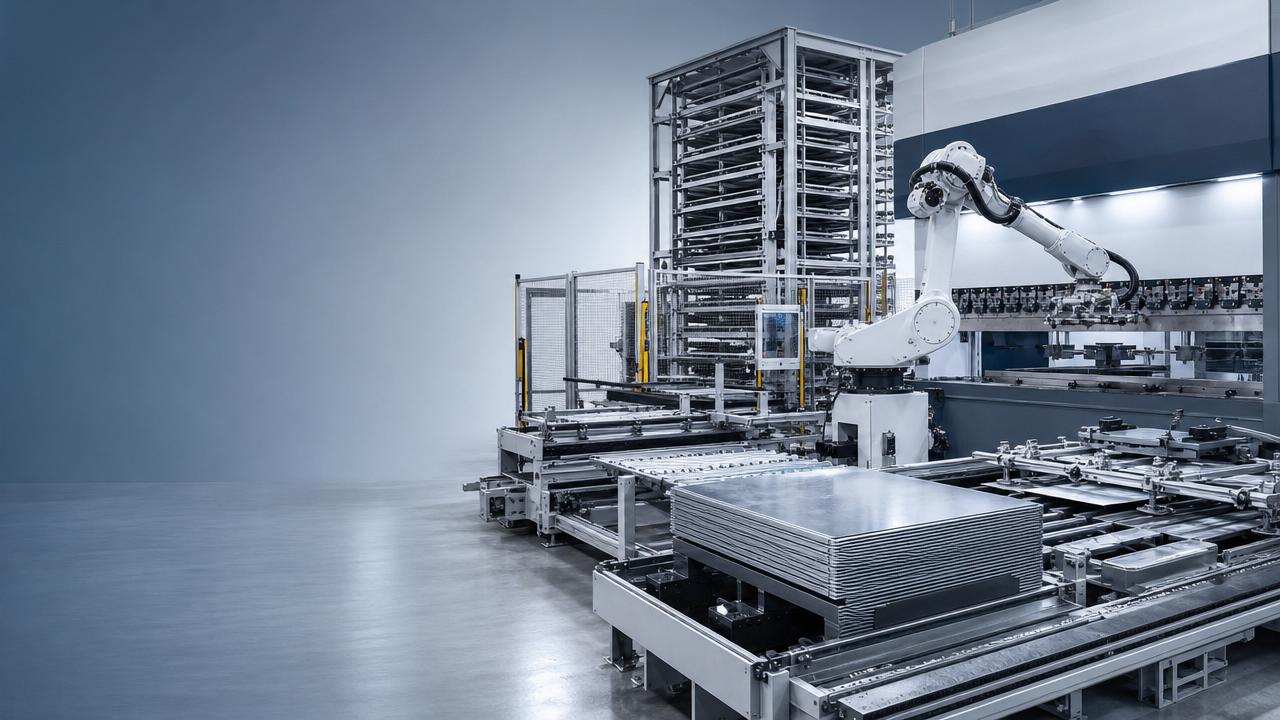
Industrial automation reduces this burden through automatic tool setting, fixture verification, robot loading, and digital work instructions.
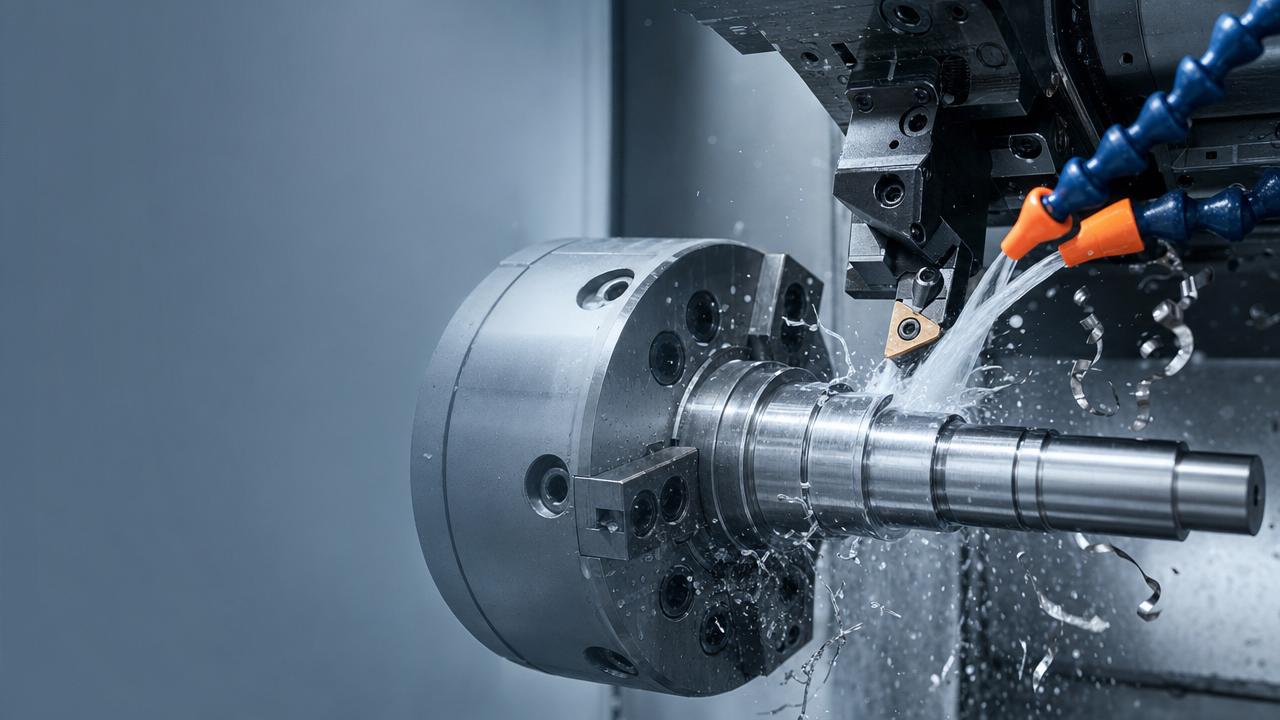
On a 5-axis CNC cell, pre-staged tools and pallet systems can cut non-cutting time dramatically.
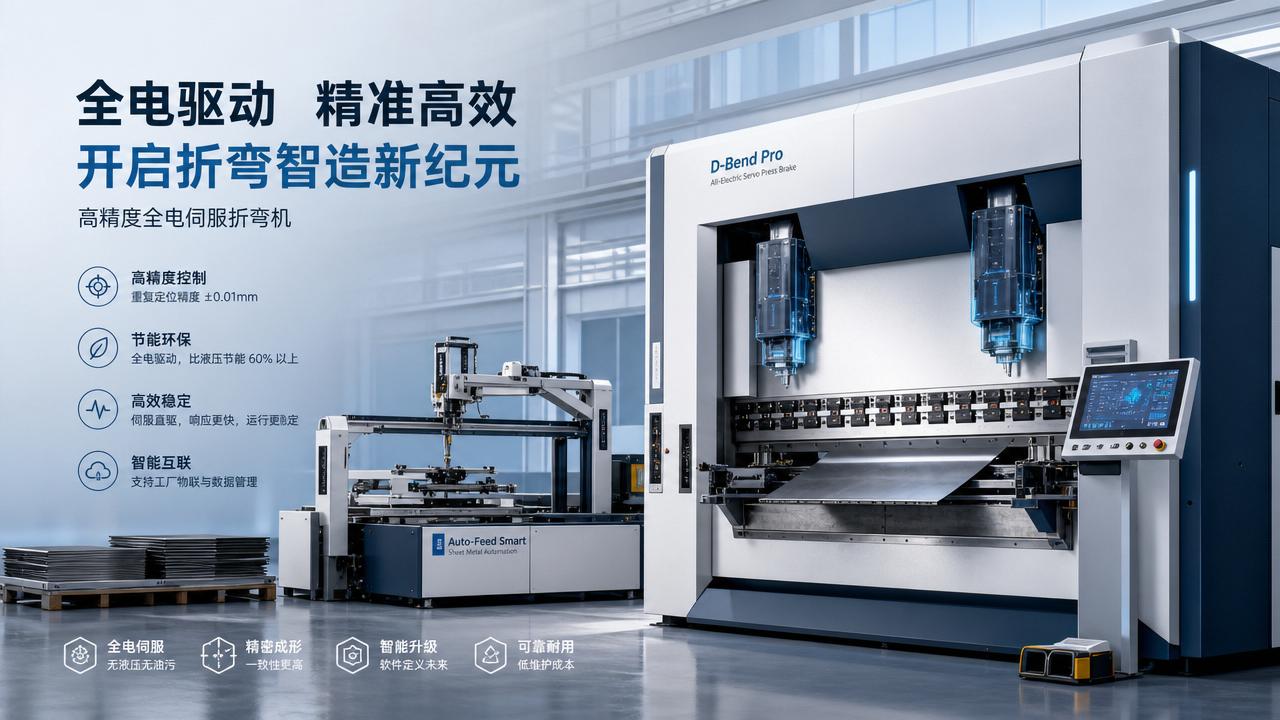
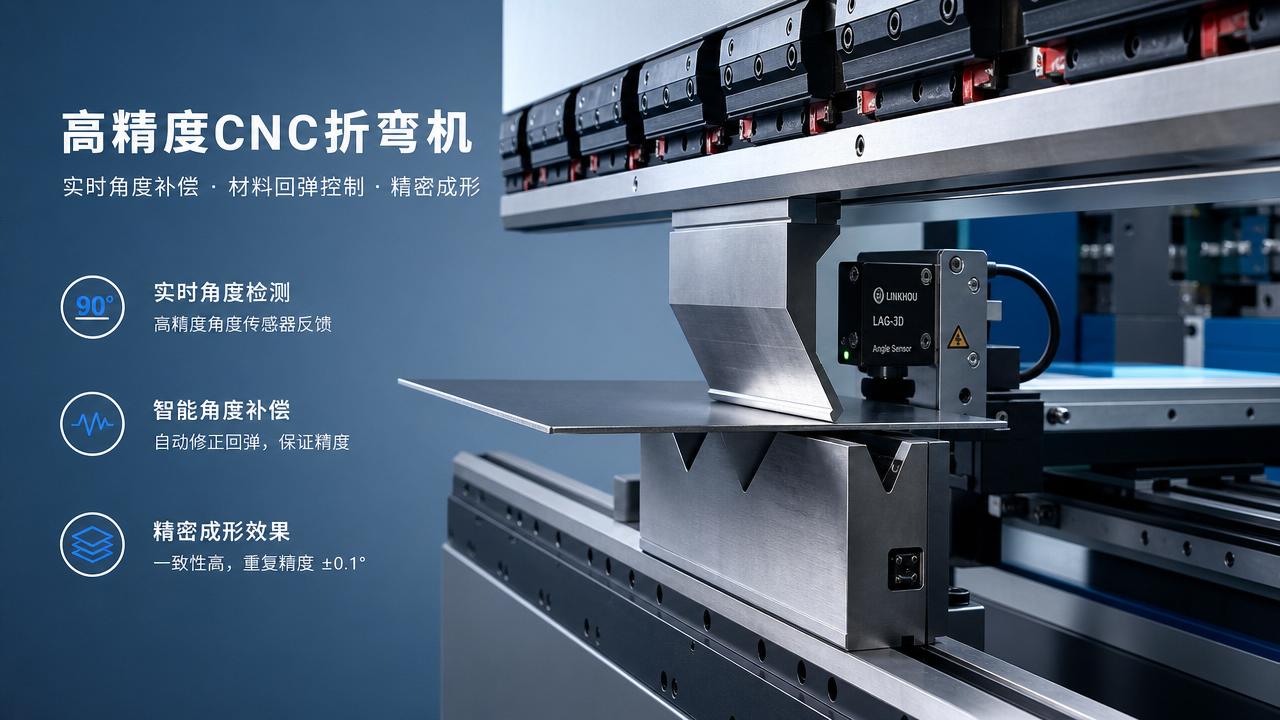
For press brakes and laser cutters, recipe-driven setup control helps repeat jobs start faster and with less trial-and-error.
2. Better process consistency
OEE improves when every run begins from a stable baseline.
Industrial automation standardizes repeatable steps that humans should not have to reinvent every shift.
Examples include automatic angle correction on press brakes, closed-loop cutting parameter control, and in-machine probing on CNC equipment.
That stability supports higher first-pass yield, which directly lifts the quality part of OEE.
3. Real-time visibility
A surprising amount of OEE loss comes from delayed decisions.
Industrial automation creates live feedback from machine states, spindle loads, alarm histories, queue status, and inspection data.
That visibility helps teams respond before small interruptions become full bottlenecks.
For decision-makers, real-time dashboards also make OEE a management tool, not just a monthly report.
4. Smarter labor use
Labor shortages are pushing many factories to rethink where skill should be applied.
Industrial automation moves repetitive handling and data capture away from skilled technicians.
That frees experts to focus on programming, validation, process optimization, and root-cause problem solving.
The result is often a stronger OEE improvement than simple headcount reduction alone would suggest.
Where Industrial Automation Delivers Fastest
Not every process needs the same level of automation.
The fastest OEE gains usually appear where complexity and downtime intersect.
A Practical OEE Improvement Roadmap
The strongest industrial automation strategy usually starts small and scales with proof.
That matters in high-mix operations, where over-automation can create rigidity instead of flexibility.
Step 1: Measure loss by job family
Start with real downtime categories, not assumptions.
Group parts by setup logic, tooling requirements, and inspection complexity.
This shows where industrial automation will generate the largest OEE return.
Step 2: Target non-cutting time first
Many companies chase cycle-time optimization too early.
In mixed production, faster wins often come from automating loading, setup checks, tool staging, and data collection.
This lifts availability without increasing process risk.
Step 3: Connect equipment and information
Industrial automation works best when machines do not operate as islands.
Link machine controls, MES, tooling databases, maintenance records, and quality checkpoints.
That creates a digital thread supporting faster decisions and more reliable OEE tracking.
Step 4: Build for flexibility
Flexible automation matters more than fixed automation in this environment.
Choose modular cells, reconfigurable grippers, adaptable software workflows, and open data interfaces.
This keeps industrial automation aligned with changing demand instead of locking production into one product mix.
Risks to Avoid When Automating for OEE
Industrial automation can improve OEE quickly, but poor implementation can create new bottlenecks.
Several issues appear again and again in mixed manufacturing environments.
- Automating unstable processes before standard work is defined
- Buying isolated equipment that cannot share production data
- Focusing only on labor savings instead of total OEE impact
- Ignoring operator training and exception handling
- Using rigid systems in product lines that change every quarter
A better approach is to evaluate automation by resilience, repeatability, and decision speed.
That mindset leads to stronger OEE gains over time.
What This Means for Advanced Manufacturing Operations
Across advanced machining, cutting, and forming, the signal is becoming clearer.
Factories that improve OEE fastest are not always the ones with the most machines.
They are usually the ones using industrial automation to remove friction between precision, changeovers, and production control.
For sectors shaped by aerospace tolerances, EV lightweighting, and shorter development cycles, that matters even more.
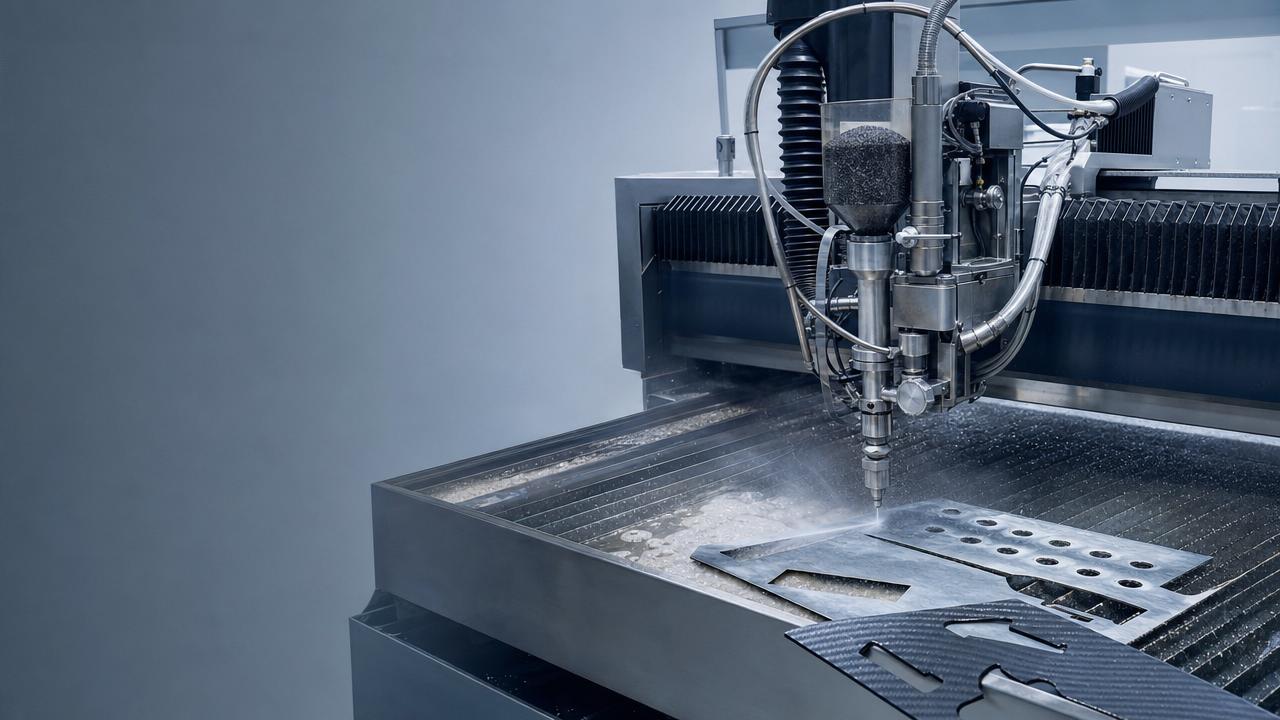
A 5-axis machining center, laser cutter, CNC lathe, press brake, or waterjet system only creates full value when the surrounding workflow is equally intelligent.
Industrial automation turns isolated machine capability into coordinated operational performance.
That is the real path to higher OEE in high-mix, low-volume manufacturing.
The next practical step is simple: identify one product family, measure its hidden downtime, and apply industrial automation where flexibility and visibility will matter most.
Product Recommendations
 Abrasive Delivery SystemsIndustrial Waterjet Cutters: Abrasive Costs That Erode MarginsAnalyst :5-Axis Machining Scientist
 All-Electric Press BrakesAll-Electric Servo Drives: Energy Savings vs Upgrade CostAnalyst :Precision Turning Architect
 All-Electric Press BrakesReal-Time Angle Compensation: What It Fixes and What It Doesn'tAnalyst :Precision Turning Architect
 Latest Sector NewsHigh-Strength Steel Machining: Tool Life Myths to AvoidAnalyst :Dr. Alistair Vaughn
 3D 5-Axis LaserComposite Material Cutting Without Delamination: Key MethodsAnalyst :
 Robotic Bending CellsAutomated Sheet Metal Forming: Hidden Setup Costs ComparedAnalyst :Precision Turning Architect