Scaling an EV program from pilot line to profitable production is where technical ambition often meets costly uncertainty. For enterprise decision-makers, EV manufacturing solutions can cut ramp-up risk by aligning precision machining, flexible sheet metal forming, automation, and data-driven process control before bottlenecks become business failures. From battery enclosures and lightweight structural parts to motor components and high-strength steel assemblies, the right manufacturing strategy helps stabilize quality, protect timelines, and improve capital efficiency in a market where speed and repeatability define competitiveness.
Why ramp-up risk is different in EV production
EV programs compress product development, tooling validation, supplier qualification, and volume production into shorter windows than many legacy vehicle platforms.
A delay in one process, such as battery tray forming or motor housing machining, can affect vehicle launch timing, cash flow, and investor confidence.
Where enterprise teams usually lose control
- Process capability is underestimated, especially when aluminum castings, high-strength steel, and mixed-material assemblies require different cutting and forming behaviors.
- Equipment is selected by headline specifications rather than real production stability, spindle rigidity, thermal control, software integration, and serviceability.
- Automation is added too late, creating unstable handoffs between machining, inspection, forming, welding, deburring, and logistics.
- Quality data remains fragmented, making it difficult to trace scrap causes, tool wear patterns, or dimensional drift across shifts.
This is why EV manufacturing solutions should be evaluated as a connected industrial system, not as isolated machines purchased department by department.
What should EV manufacturing solutions include before scale-up?
Effective EV manufacturing solutions connect equipment, tooling, process simulation, material behavior, inspection feedback, and automation logic into one production strategy.
For AMTS, this connection begins with industrial mother machines: 5-axis CNC centers, CNC lathes, laser cutting machines, press brakes, and waterjet cutters.
Core manufacturing pillars for EV ramp-up
The following table shows how key equipment categories reduce ramp-up risk across common EV components and production constraints.
The practical value of EV manufacturing solutions lies in matching each process to component geometry, tolerance class, material sensitivity, and expected volume curve.
Which EV components create the highest manufacturing uncertainty?
Not every component deserves the same engineering attention during ramp-up. The highest-risk parts combine tight tolerance, changing design, and costly rework.
Battery enclosures and tray systems
Battery enclosures must balance stiffness, sealing, crash behavior, corrosion resistance, and weight reduction. Small forming deviations may affect assembly stack-up.
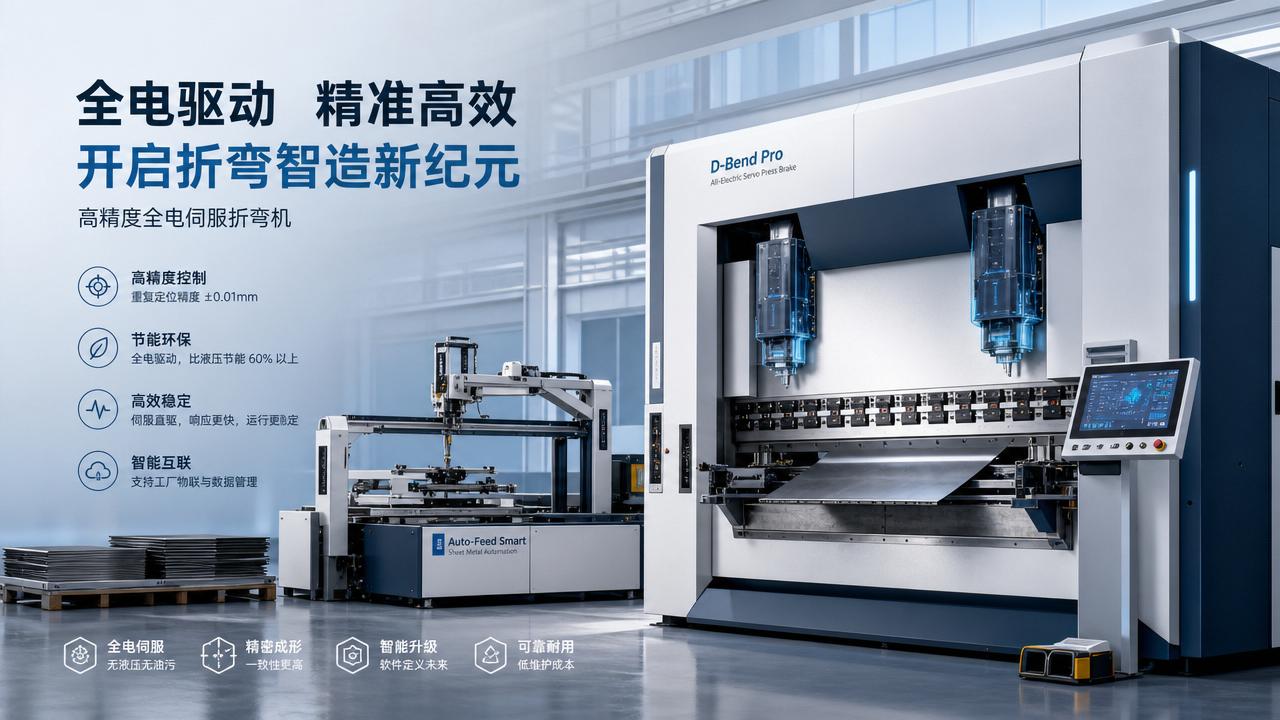
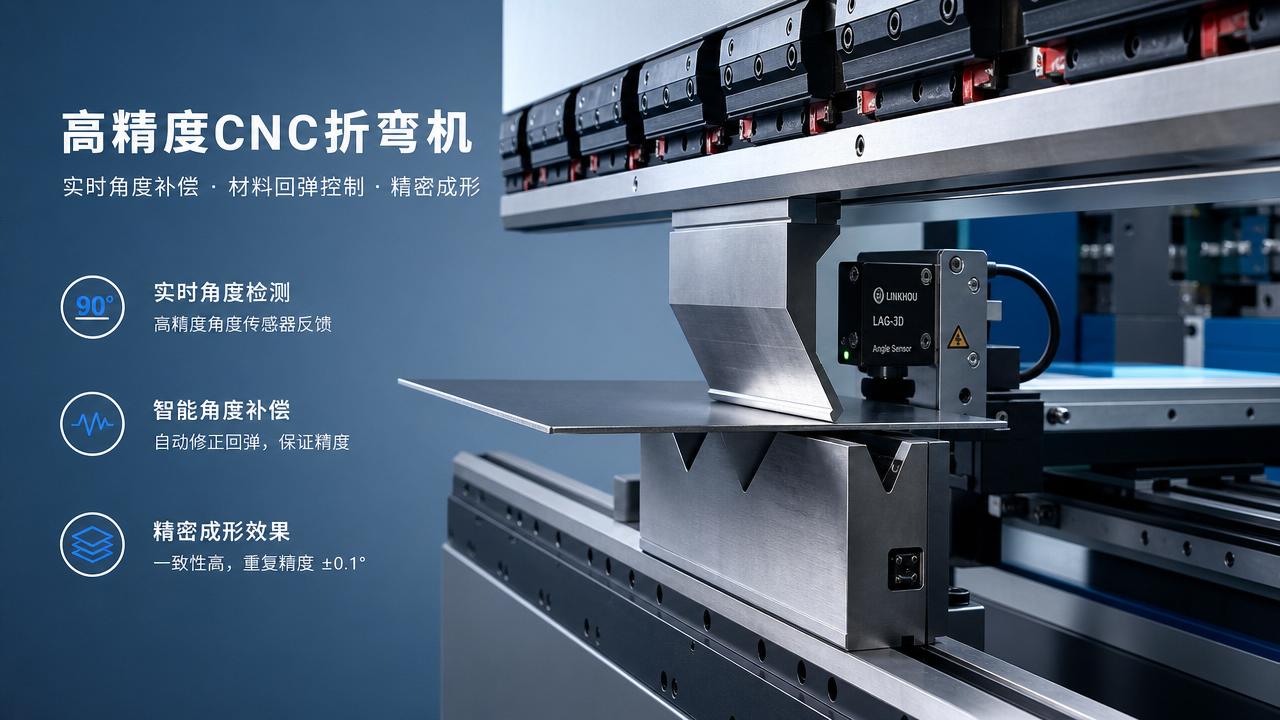
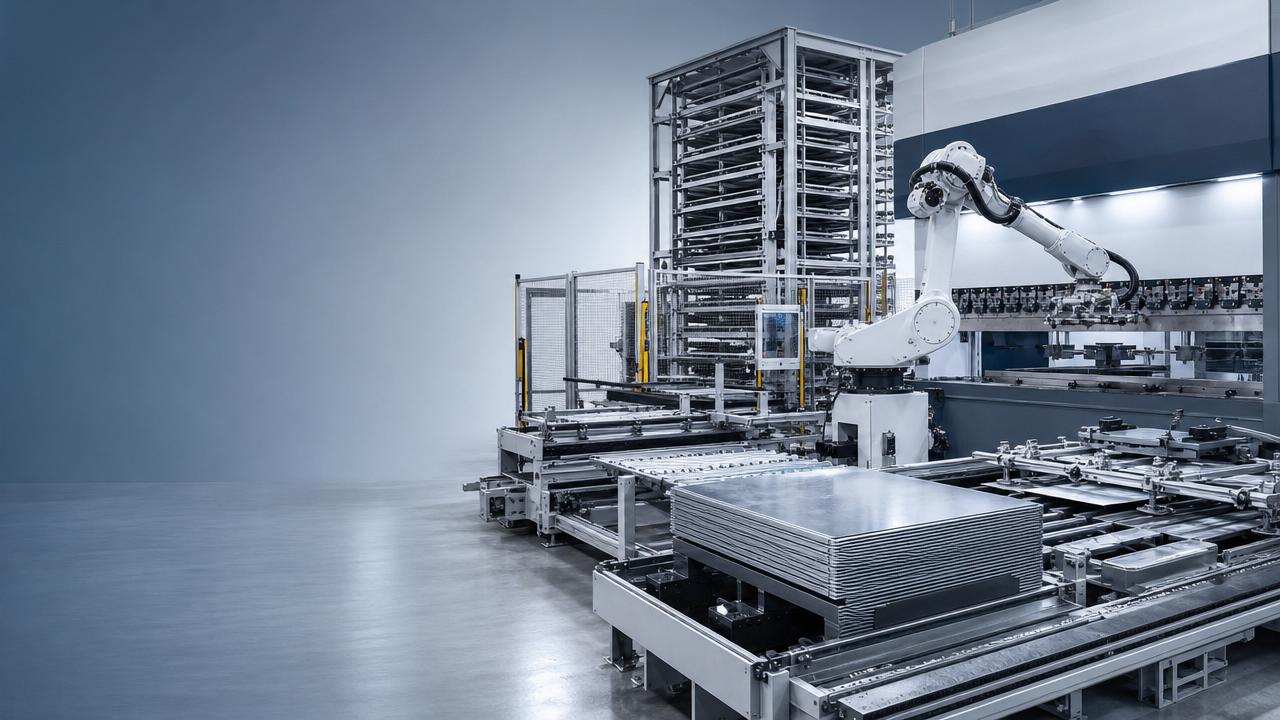
EV manufacturing solutions for these parts often combine laser cutting, press brake forming, robotic handling, and inspection feedback for repeatable geometry.
Electric motor and powertrain parts
Motor housings, rotor shafts, and precision covers require stable machining. Poor concentricity or thermal drift can create noise, vibration, and efficiency losses.
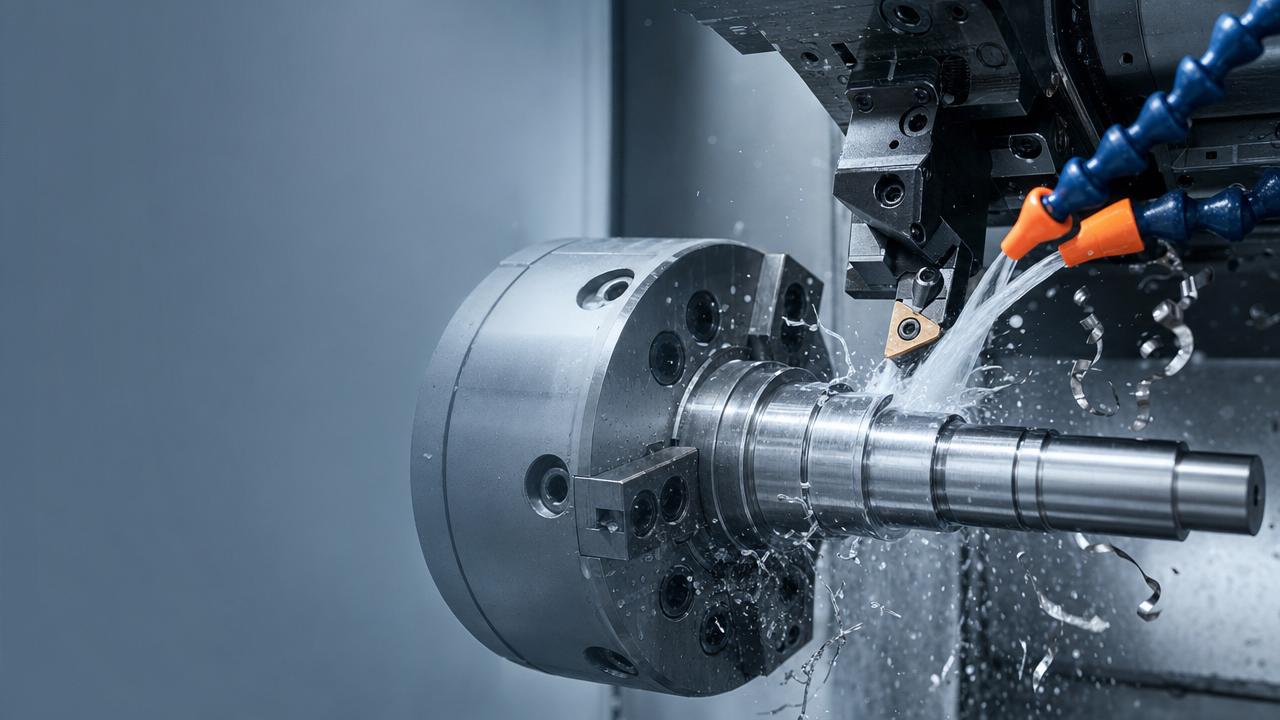
Here, 5-axis machining centers and CNC lathes should be evaluated for rigidity, compensation functions, tool life management, and measurement integration.
Lightweight structures and mixed-material assemblies
EV lightweighting increases the use of aluminum, high-strength steel, composites, and local reinforcement designs. Each material changes cutting behavior and forming limits.
Industrial waterjet cutting becomes valuable when cold cutting protects carbon fiber, titanium alloy, or laminated structures from thermal damage and edge degradation.
How to compare equipment-led and system-led ramp-up strategies
Many EV investments begin with machine quotations. That is understandable, but price comparison alone rarely exposes ramp-up exposure.
A system-led approach evaluates process capability, automation interface, quality loops, spare parts, operator training, and future model changes together.
The comparison below helps decision-makers judge whether EV manufacturing solutions are being selected for launch survival or long-term competitiveness.
For enterprise buyers, the stronger option is usually the one that protects launch timing, not merely the one with the lowest acquisition cost.
Procurement checklist for choosing EV manufacturing solutions
Procurement teams should translate production risk into measurable questions. This prevents subjective comparisons between suppliers, integrators, and equipment proposals.
Questions to ask before releasing capital expenditure
- What tolerance must be maintained at pilot volume, launch volume, and mature volume, and which process variables threaten it most?
- Can the proposed CNC system, servo drive, linear scale, or feedback loop support the required compensation strategy?
- How will fixtures, clamps, tools, abrasives, and consumables behave under continuous production rather than short demonstrations?
- Which data points will be captured for tool wear, thermal drift, forming angle deviation, scrap, downtime, and maintenance events?
- What spare parts, technical support, operator training, and software updates are required to sustain output after acceptance?
These questions turn EV manufacturing solutions into accountable business decisions, helping finance, engineering, procurement, and operations work from one risk map.
Evaluation table for enterprise decision-makers
Use this table to compare EV manufacturing solutions when shortlisted proposals appear technically similar but differ in implementation depth.
A disciplined selection process also clarifies where premium equipment is justified and where standardized solutions can protect budget.
Cost control: what should be optimized and what should not?
Budget pressure is real, especially when EV demand forecasts remain volatile. However, cutting the wrong cost can increase ramp-up losses.
The best EV manufacturing solutions separate negotiable cost from capability-critical investment, allowing leadership to protect margins without weakening launch readiness.
Cost areas that deserve different treatment
- Do not underinvest in machine rigidity, control accuracy, thermal management, or measurement strategy when parts define safety, sealing, or motor performance.
- Optimize tooling standardization, fixture modularity, nesting efficiency, consumable management, and preventive maintenance schedules before reducing core capability.
- Evaluate total launch cost, including scrap, overtime, engineering firefighting, delayed qualification, expedited freight, and customer penalty exposure.
A cheaper machine that cannot hold tolerance across real production conditions may be more expensive than a better specified system.
Compliance, traceability, and quality expectations
EV manufacturers often face strict expectations from automotive customers, battery partners, and regional regulations. Quality documentation is part of market access.
Standards and controls commonly considered
The following references are not a substitute for project-specific legal review, but they are useful when structuring EV manufacturing solutions.
When compliance is considered early, EV manufacturing solutions can reduce document rework, audit stress, and late-stage process redesign.
Implementation roadmap: from pilot line to stable output
A strong roadmap converts technical ambition into controlled execution. It should define decision gates, not just installation dates.
Recommended ramp-up sequence
- Map critical parts by tolerance, safety relevance, material difficulty, and expected engineering change frequency.
- Validate machining, cutting, and forming assumptions using representative materials, fixtures, tools, and inspection plans.
- Select equipment and automation interfaces according to mature-volume needs, not only pilot-line convenience.
- Build a digital quality loop covering process parameters, alarms, tool changes, measurements, scrap reasons, and maintenance events.
- Run phased capacity increases, comparing takt time, first-pass yield, downtime, and operator intervention at every stage.
This sequence makes EV manufacturing solutions easier to govern because every phase produces evidence for the next investment decision.
Common misconceptions that increase launch risk
Ramp-up failures often come from reasonable but incomplete assumptions. Identifying these misconceptions early helps leadership avoid expensive corrections.
Misconception 1: pilot-line success guarantees mass-production stability
Pilot success proves feasibility, not durability. Long shifts reveal thermal growth, consumable variation, operator fatigue, supplier deviation, and maintenance weakness.
Misconception 2: automation can be added after the process is fixed
Automation affects fixturing, access, part orientation, safety, inspection, and cycle balance. Adding it later can force costly redesign.
Misconception 3: all suppliers interpret precision the same way
Micron-level tolerance depends on machine design, environment, software, tooling, metrology, and operator discipline. Precision claims must be validated by evidence.
FAQ about EV manufacturing solutions
These questions reflect typical concerns from executives, plant leaders, engineering teams, and procurement managers preparing for EV production growth.
How early should EV manufacturing solutions be evaluated?
They should be evaluated before final process freeze. Early review helps align part design, tooling access, forming sequence, inspection points, and automation strategy.
Are 5-axis CNC machines necessary for every EV component?
No. They are most valuable for complex geometries, tight datum relationships, and multi-face machining where setup reduction improves accuracy and throughput.
When is waterjet cutting better than laser cutting?
Waterjet cutting is preferable for heat-sensitive composites, titanium alloys, laminated materials, or parts where a heat-affected zone could damage performance.
What data should be captured during ramp-up?
Capture cycle time, dimensional results, scrap reasons, alarm history, tool wear, consumable usage, temperature effects, maintenance events, and operator interventions.
Why consult AMTS when planning EV manufacturing solutions?
AMTS focuses on the advanced manufacturing foundation behind EV scale-up: precision machining, metal cutting, flexible forming, automation, and strategic intelligence.
Our perspective connects 5-axis machining science, laser processing knowledge, metal forming analysis, CNC systems, linear scales, and supply chain dynamics.
Enterprise teams can consult AMTS for parameter confirmation, equipment selection logic, process comparison, delivery-cycle assessment, customization priorities, and certification-related questions.
If your EV program faces aggressive launch targets, changing designs, or uncertain capacity planning, discuss your component mix and risk points with AMTS.
A structured review of EV manufacturing solutions can clarify investment priorities, reduce avoidable ramp-up surprises, and support more confident production decisions.
Product Recommendations
 Abrasive Delivery SystemsIndustrial Waterjet Cutters: Abrasive Costs That Erode MarginsAnalyst :5-Axis Machining Scientist
 All-Electric Press BrakesAll-Electric Servo Drives: Energy Savings vs Upgrade CostAnalyst :Precision Turning Architect
 All-Electric Press BrakesReal-Time Angle Compensation: What It Fixes and What It Doesn'tAnalyst :Precision Turning Architect
 Latest Sector NewsHigh-Strength Steel Machining: Tool Life Myths to AvoidAnalyst :Dr. Alistair Vaughn
 3D 5-Axis LaserComposite Material Cutting Without Delamination: Key MethodsAnalyst :
 Robotic Bending CellsAutomated Sheet Metal Forming: Hidden Setup Costs ComparedAnalyst :Precision Turning Architect