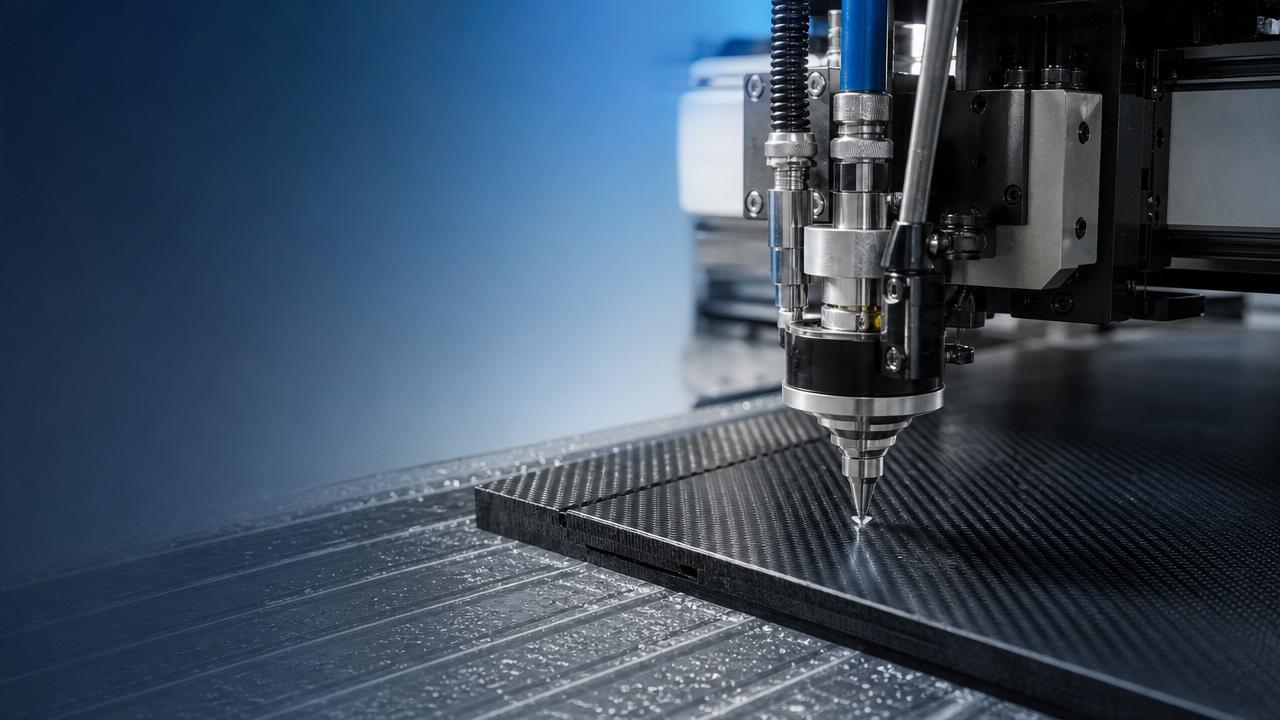
Heat-sensitive composite materials combine low weight, high strength, and tailored performance, but they react poorly to excessive processing heat. That matters because many advanced parts now depend on materials that can lose structural integrity, surface quality, or dimensional accuracy when exposed to an uncontrolled thermal load.
The question is no longer only what these materials are. It is also where they are used, how they behave during machining, and why cold-cutting methods increasingly shape manufacturing decisions across aerospace, mobility, protection, electronics, and precision industrial systems.
In that context, heat-sensitive composite materials sit at the intersection of material science and process control. For a platform like AMTS, which tracks 5-axis machining, laser processing, press brakes, and industrial waterjet cutting, they are a practical signal of where manufacturing precision becomes a strategic issue.
Understanding the material behind the term
Heat-sensitive composite materials are engineered combinations of fibers, matrices, laminates, or layered structures that can be weakened or visually damaged by heat during cutting, drilling, trimming, or finishing.
They are not a single material family. The term usually covers carbon fiber reinforced polymers, glass fiber composites, aramid laminates, hybrid panels, ballistic glazing structures, and certain resin-based engineered assemblies.
Their sensitivity comes from the matrix, bonding layers, coatings, or internal interfaces. Even when the reinforcement itself is stable, the surrounding resin or adhesive may char, soften, delaminate, or distort.
This is why heat-affected zone control becomes critical. A part may look acceptable at first glance, yet hidden thermal damage can shorten service life, reduce fatigue resistance, or disrupt downstream assembly tolerances.
Why industry attention keeps increasing
The rise of lightweight engineering is the main reason. Aerospace programs, electric vehicles, rail systems, medical equipment, and protective products all need structures that reduce mass without giving up strength.
That shift brings more heat-sensitive composite materials into real production, not just prototype labs. As volumes grow, the challenge moves from material selection to repeatable, cost-aware, high-precision processing.
Another factor is geometry. Composite parts are often curved, layered, or integrated into complex assemblies. A small thermal defect near an edge, hole, or contour can affect fit, sealing, load transfer, or aerodynamic behavior.
AMTS closely follows this trend because precision equipment decisions increasingly depend on the relationship between material behavior and process physics. In advanced manufacturing, machine capability alone is not enough. Thermal discipline matters just as much.
Where heat-sensitive composite materials are used
Application diversity is one reason the topic deserves broader attention. These materials appear in high-value sectors where performance, weight, and reliability must stay balanced.
Aerospace remains the most visible case. Wing structures, interior components, nacelle parts, fairings, and secondary structural panels often use carbon fiber systems that demand careful edge finishing.
In NEV manufacturing, lightweighting pressures keep expanding the use of composite panels and hybrid assemblies. The value is not only lower weight. It also includes corrosion resistance, design flexibility, and better energy efficiency.
Protective applications are different but equally demanding. Bullet-resistant glazing and layered armor systems require clean cuts that do not compromise bonding layers or create hidden weakness zones.
The real processing problem is not just cutting
Many production issues appear after the cut. Heat can alter hole quality, edge integrity, bonding readiness, and part-to-part consistency. That makes thermal exposure a full-process concern, not a single machining parameter.
For heat-sensitive composite materials, common risks include resin recession, fiber pull-out, discoloration, microcracking, delamination, and loss of tight tolerance near the contour.
A fast process can still be a poor process if the part needs rework or fails inspection. In high-value sectors, the cost of hidden thermal damage often exceeds the cost of slower but cleaner machining.
Why cold-cutting gains attention
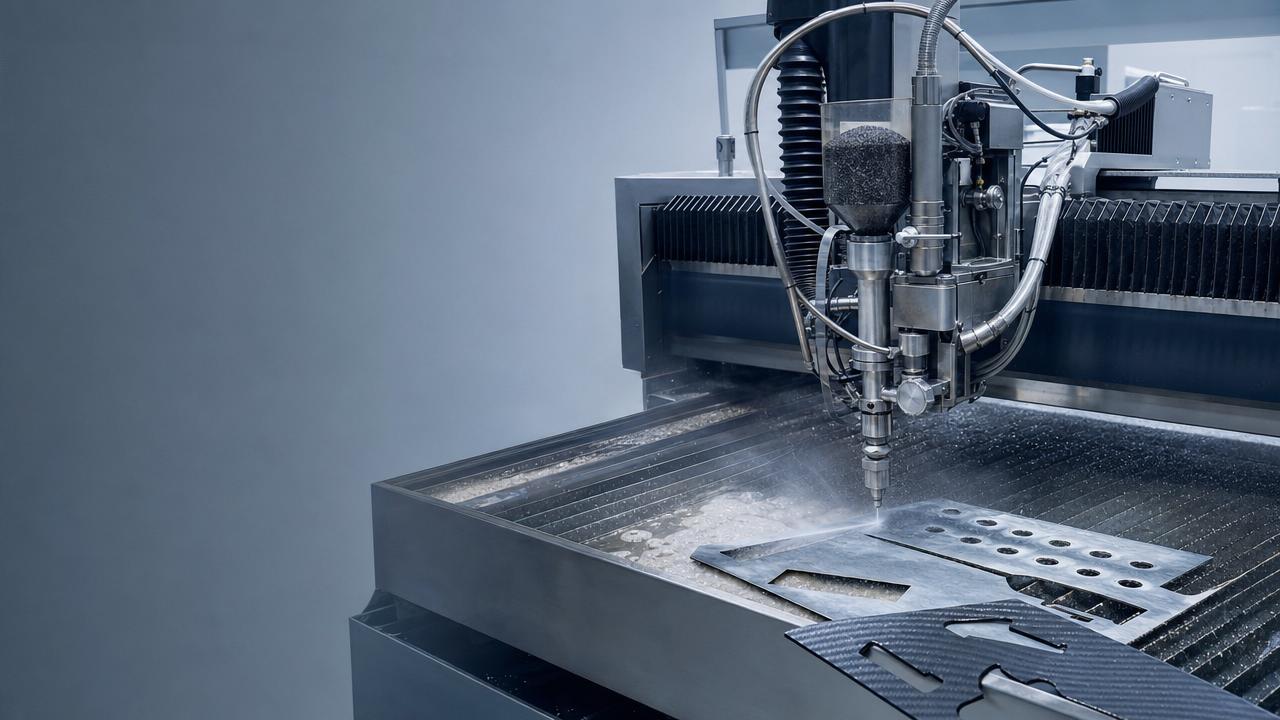
This is where industrial waterjet systems stand out. They remove material without introducing a conventional heat-affected zone, which is especially useful for heat-sensitive composite materials and mixed-material stacks.
AMTS highlights waterjet cutting for exactly this reason. In a production environment that increasingly mixes composites, titanium alloys, glass, and layered structures, cold cutting solves problems thermal tools may intensify.
That does not mean every composite part should be cut by waterjet. It means process selection should start with material behavior, edge requirements, tolerance expectations, and downstream assembly demands.
How related equipment fits the wider manufacturing picture
Heat-sensitive composite materials are rarely processed in isolation. They move through broader manufacturing chains where different machines contribute different forms of precision.
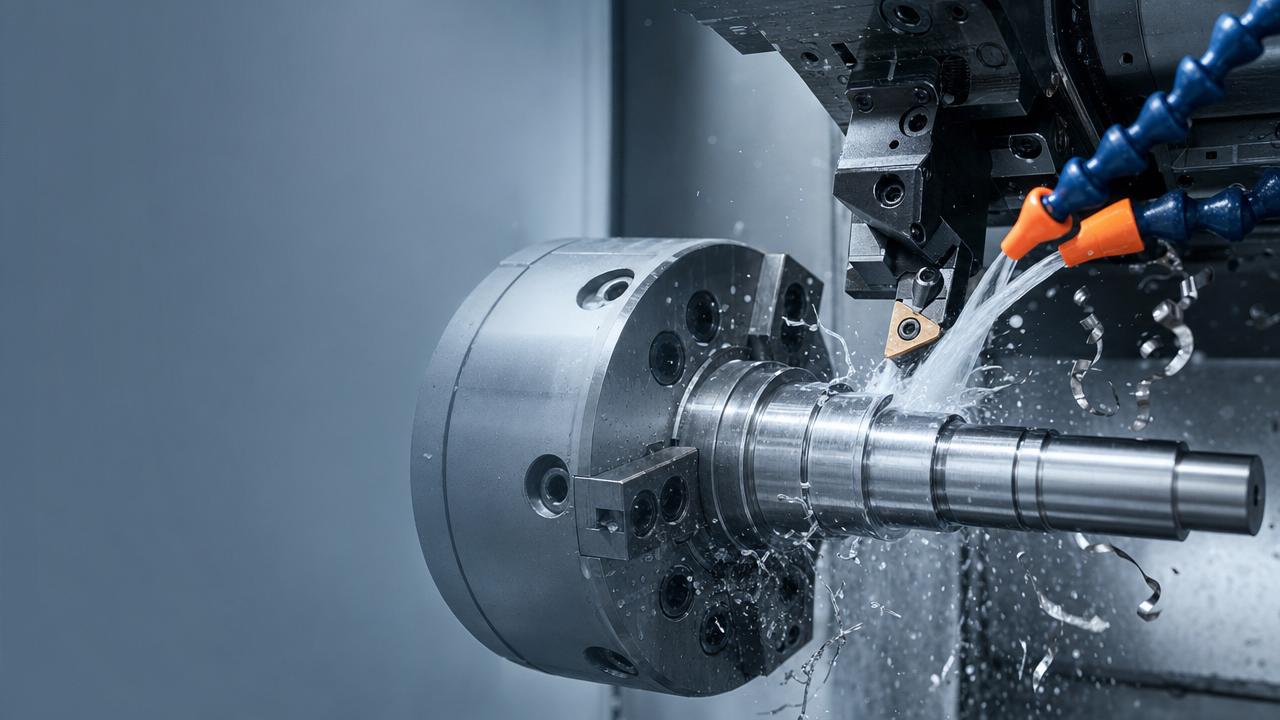
5-axis CNC machining centers support complex trimming, fixture referencing, and high-accuracy finishing on shaped components. Their value increases when spatial toolpath control must respect part geometry and local material behavior.
Laser cutting remains strong in many sheet applications, especially when speed and automation dominate. Yet for heat-sensitive composite materials, laser suitability depends heavily on composition, thickness, edge specification, and thermal tolerance.
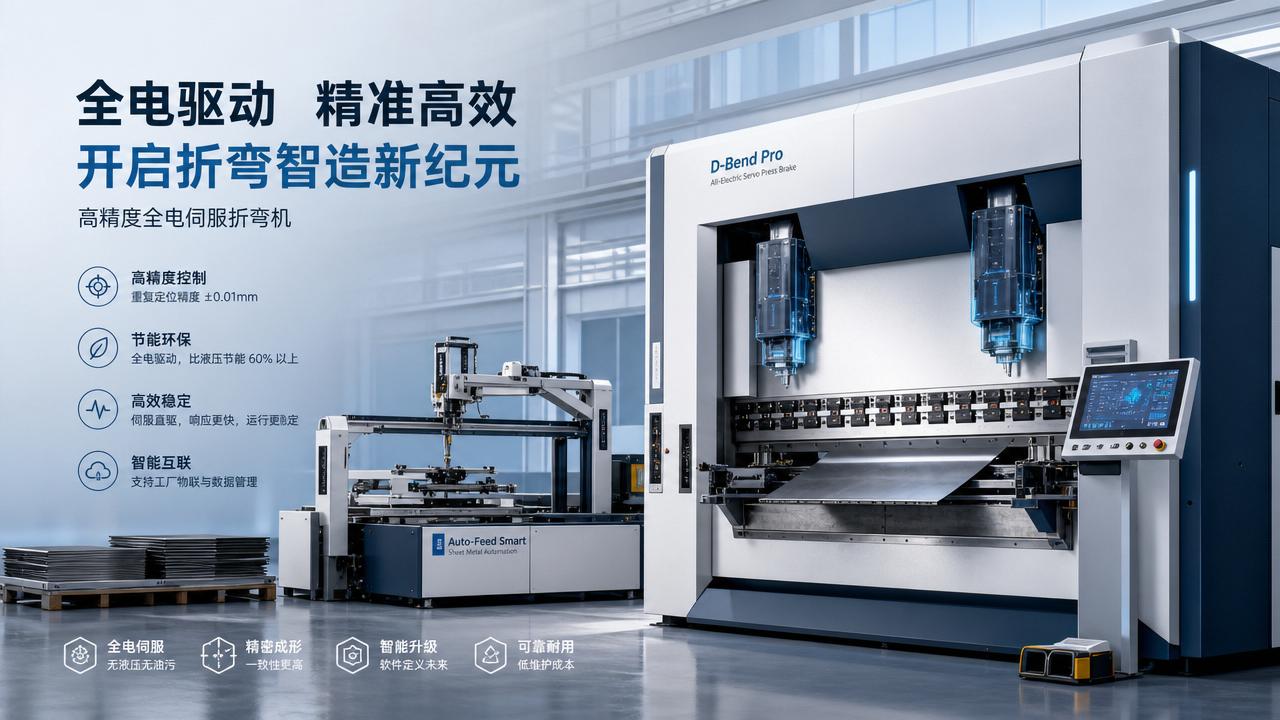
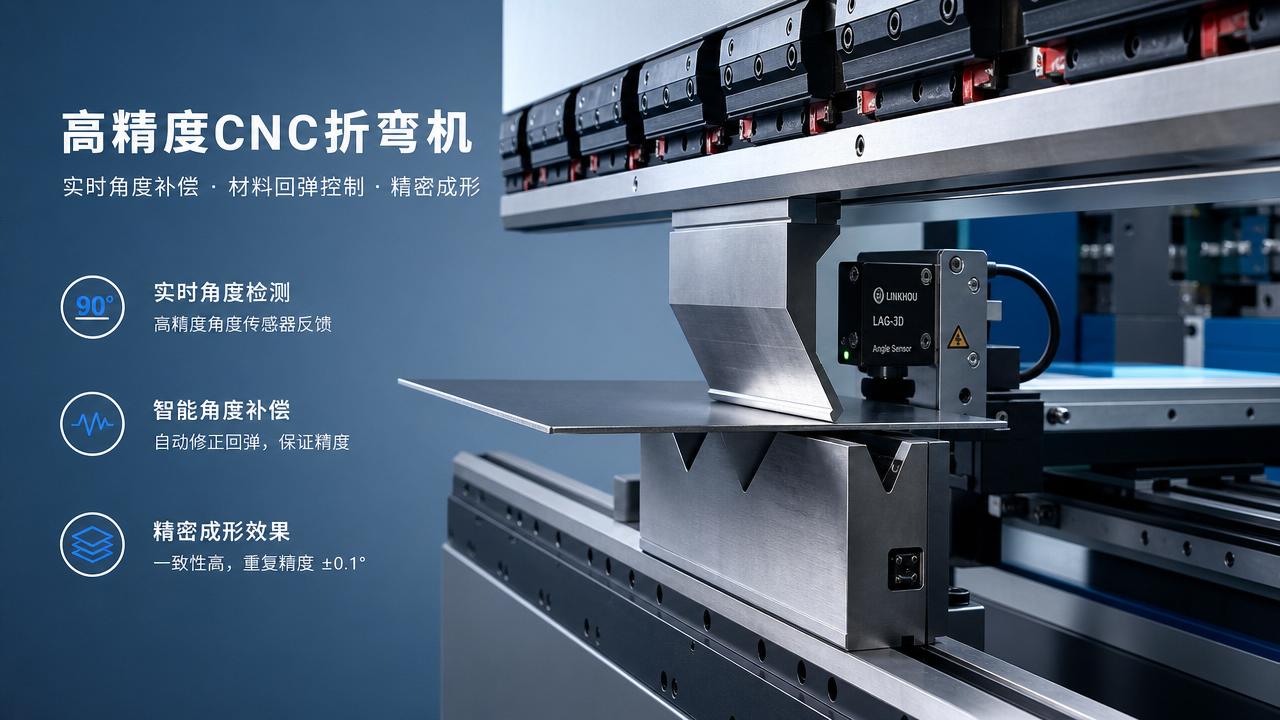
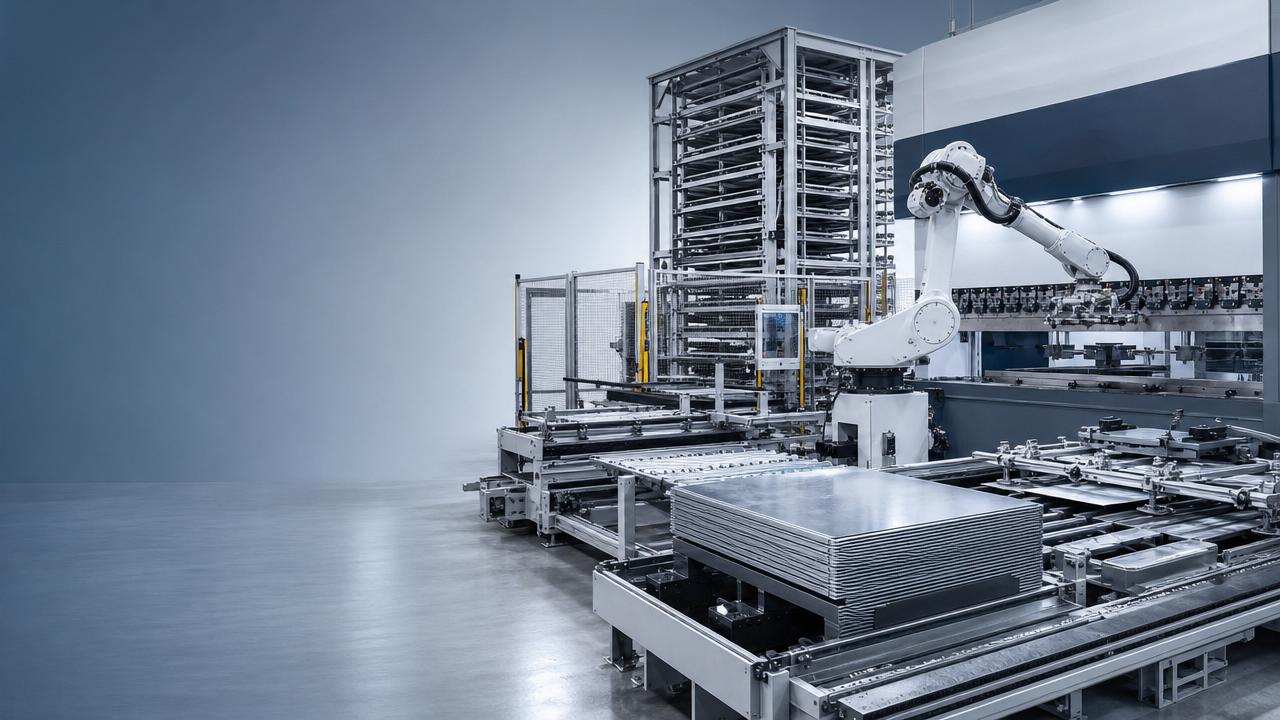
Press brakes matter in adjacent metal-forming workflows, particularly where composite parts integrate with lightweight metal frames. The wider lesson is that hybrid manufacturing is becoming normal, not exceptional.
This is also why AMTS frames precision as an ecosystem. Material science, CNC algorithms, machine rigidity, process monitoring, and supply chain intelligence all influence whether a component performs as designed.
What to evaluate before choosing a process
A useful assessment begins with the part, not the machine brochure. Heat-sensitive composite materials behave differently depending on layup, resin family, coating, thickness, and edge function.
- Check whether the critical risk is delamination, edge burn, taper, burr, or dimensional instability.
- Review if the cut edge stays visible, bonded, sealed, painted, or load-bearing in final service.
- Compare production volume with acceptable scrap rate and rework tolerance.
- Confirm whether the part includes hybrid stacks such as composite-to-metal or glass-to-polymer layers.
- Look at inspection standards, especially where aerospace or safety certification applies.
In practice, the best process is often the one that preserves predictable quality over time. For heat-sensitive composite materials, repeatability can be more valuable than peak cutting speed.
Signals worth tracking next
Several trends will keep reshaping this topic. One is the wider use of hybrid structures in aerospace and electric mobility. Another is tighter traceability around how advanced materials are machined.
Equipment intelligence also matters more now. Process simulation, adaptive control, and data-driven quality tracking help reduce uncertainty when handling heat-sensitive composite materials in demanding production flows.
For anyone evaluating suppliers, technologies, or manufacturing routes, a strong next step is to map each part by material sensitivity, geometry complexity, edge quality target, and inspection requirement.
That approach makes it easier to judge when 5-axis machining, laser systems, or industrial waterjet cutting fit the job. It also creates a clearer framework for following AMTS intelligence on precision equipment, process evolution, and advanced manufacturing risk.
In short, understanding where heat-sensitive composite materials are used is only the starting point. The more valuable insight is knowing how material behavior should shape machining choices, quality expectations, and future investment decisions.
Product Recommendations
 Abrasive Delivery SystemsIndustrial Waterjet Cutters: Abrasive Costs That Erode MarginsAnalyst :5-Axis Machining Scientist
 All-Electric Press BrakesAll-Electric Servo Drives: Energy Savings vs Upgrade CostAnalyst :Precision Turning Architect
 All-Electric Press BrakesReal-Time Angle Compensation: What It Fixes and What It Doesn'tAnalyst :Precision Turning Architect
 Latest Sector NewsHigh-Strength Steel Machining: Tool Life Myths to AvoidAnalyst :Dr. Alistair Vaughn
 3D 5-Axis LaserComposite Material Cutting Without Delamination: Key MethodsAnalyst :
 Robotic Bending CellsAutomated Sheet Metal Forming: Hidden Setup Costs ComparedAnalyst :Precision Turning Architect