Why tolerance reading has become a sharper competitive issue
Precision CNC machining is no longer judged only by machine brochures or spindle speed claims.
The real dividing line increasingly sits inside drawings, notes, and specification sheets.
That shift is becoming clearer across aerospace, medical, electronics, and NEV supply chains.
Parts are lighter, geometries are tighter, and tolerance stacks are less forgiving than before.
A drawing may look simple, yet one missed symbol can change cost, process choice, and scrap risk.
In precision CNC machining, tolerance interpretation is now part of technical due diligence.
This matters even more as advanced manufacturing moves toward unmanned cells and closed-loop inspection.
If the specification is misunderstood at the start, digital control cannot rescue the wrong intent later.
That is why tolerance literacy has become a practical filter for evaluating capability, consistency, and manufacturability.
What the latest drawings are signaling
Recent engineering packages are carrying more layered requirements than legacy prints.
Size tolerances still matter, but they rarely tell the whole quality story.
Geometric dimensioning and tolerancing, datum structures, surface finish limits, and note-driven exceptions are appearing more often.
For precision CNC machining, that means reading dimensions as a system, not as isolated numbers.
A hole of ±0.01 mm may be less critical than its positional tolerance to datums A, B, and C.
Likewise, a flatness callout can quietly force different workholding and probing strategy.
In five-axis work, profile tolerances are especially influential.
They often reflect aerodynamic, sealing, or assembly intent rather than simple shape preference.
AMTS has closely tracked this pattern across high-precision metal cutting and advanced forming sectors.
The broader message is straightforward: specifications are becoming more functional and less purely dimensional.
The tolerance callouts that deserve extra caution
- Bilateral and unilateral size tolerances that affect tool compensation differently.
- True position controls tied to datums, especially in multi-hole patterns.
- Profile of a surface requirements on blades, housings, and freeform features.
- Runout and concentricity-related controls in turned cylindrical parts.
- Surface roughness notes that indirectly limit feed, tool wear, or finishing route.
- General tolerances that apply unless a local note overrides them.
How to read drawings without missing the manufacturing intent
The first step is separating cosmetic dimensions from function-defining ones.
In precision CNC machining, critical features usually reveal themselves through relationship, not magnitude alone.
Ask what the feature must do in assembly, sealing, rotation, thermal contact, or load transfer.
That question often explains why a tolerance is tight.
The second step is following the datum logic carefully.
A datum scheme tells you how the designer wants the part located in the real world.
If the machining setup conflicts with that logic, compliance becomes unstable.
The third step is checking all notes before estimating process capability.
Material condition, edge break rules, burr limits, coating buildup, and post-machining heat treatment can all shift tolerance outcomes.
This is where many evaluations go wrong.
A nominally achievable tolerance may become unrealistic after plating, welding, or stress relief.
Why tolerance demands are tightening across equipment and materials
Several forces are pushing precision CNC machining toward stricter and more complex tolerance control.
One driver is part integration.
Design teams increasingly combine multiple functions into fewer components.
That reduces assembly steps but raises the burden on each machined feature.
Another driver is lightweighting, especially in NEV structures and aerospace hardware.
Thin walls, high-strength aluminum, titanium, and mixed-material interfaces distort more easily.
This makes tolerance achievement less about static machine accuracy and more about process stability.
A third force is digital manufacturing maturity.
As probing, simulation, and RTCP-based five-axis control improve, designers become comfortable specifying closer functional limits.
AMTS has observed this interplay across machine tools, laser systems, and precision forming equipment.
When equipment capability rises, specifications often become more demanding rather than more relaxed.
The impact does not stop at machining accuracy
A tolerance callout influences far more than whether a feature passes inspection.
It affects fixture design, machine selection, cutting strategy, metrology time, and even supplier risk exposure.
In precision CNC machining, the cost jump between two nearby tolerances can be surprisingly steep.
That jump often comes from process control overhead, not from cutting effort alone.
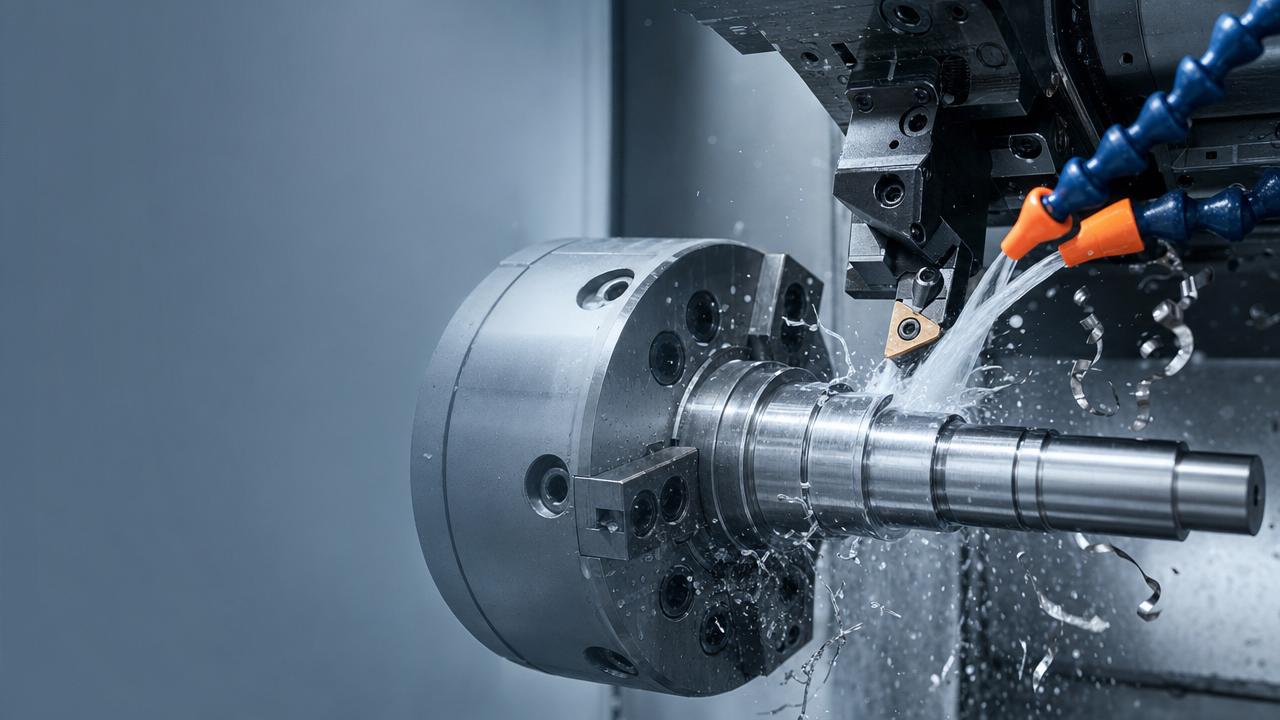
For turned parts, runout and cylindricity demands may require different spindle condition and in-process gauging.
For five-axis parts, profile and positional requirements may force single-setup strategies and thermal compensation routines.
For sheet metal and hybrid assemblies, tolerances can also shift upstream cutting and downstream forming assumptions.
That broader effect is easy to miss if drawings are reviewed feature by feature.
Where misreading usually shows up
- Quoting a process that can hit size, but not geometric relationship.
- Ignoring thermal growth on long cycle parts.
- Treating surface finish as secondary when it controls sealing or fatigue behavior.
- Overlooking note-driven inspection methods or acceptance standards.
- Assuming CMM verification is enough without matching functional datums.
What deserves closer attention during capability assessment
From recent demand patterns, simple tolerance claims deserve less trust than process-linked evidence.
The useful question is not “What tolerance can be reached?”
It is “Under what material, geometry, setup count, and inspection method is it repeatable?”
For precision CNC machining, repeatability under production conditions is the meaningful benchmark.
This is especially relevant where aerospace traceability and NEV scale economics are converging.
A shop may produce one excellent sample, yet still struggle with thermal drift, tool life, or fixture variation at volume.
That gap between sample precision and stable precision is where technical risk usually sits.
- Check whether datum simulation in inspection matches the print intent.
- Review Cp, Cpk, or similar evidence on critical features, not only final pass rates.
- Confirm if machine calibration, probing, and compensation are routine or exceptional.
- Ask how process changes after heat treatment, coating, or deburring are managed.
- Compare tolerance achievement across material families, not just across part families.
A practical reading approach for the next round of evaluations
The most reliable approach is to read every drawing in three passes.
Start with function.
Identify which features govern fit, motion, sealing, or load path.
Then read the datum architecture.
That reveals whether the part should be machined from one primary reference or through staged reorientation.
The final pass is process reality.
Check if tooling access, machine travel, part clamping, material response, and inspection access support the print.
This method keeps precision CNC machining anchored to manufacturability, not just nominal geometry.
Looking ahead, tighter drawings will continue to spread as digital design and high-performance equipment advance together.
The safer move is to build a structured tolerance review habit now.
Track recurring callouts, compare them against actual process evidence, and watch for shifts in materials and part integration.
That makes future capability judgments faster, sharper, and far less vulnerable to expensive misreads.
Product Recommendations
 Abrasive Delivery SystemsIndustrial Waterjet Cutters: Abrasive Costs That Erode MarginsAnalyst :5-Axis Machining Scientist
 All-Electric Press BrakesAll-Electric Servo Drives: Energy Savings vs Upgrade CostAnalyst :Precision Turning Architect
 All-Electric Press BrakesReal-Time Angle Compensation: What It Fixes and What It Doesn'tAnalyst :Precision Turning Architect
 Latest Sector NewsHigh-Strength Steel Machining: Tool Life Myths to AvoidAnalyst :Dr. Alistair Vaughn
 3D 5-Axis LaserComposite Material Cutting Without Delamination: Key MethodsAnalyst :
 Robotic Bending CellsAutomated Sheet Metal Forming: Hidden Setup Costs ComparedAnalyst :Precision Turning Architect