
On May 22, 2026, a new trade measure took effect in Indonesia as Ministry of Finance Regulation No. 37 imposed an additional safeguard duty on imported synthetic fiber yarn, including tariff heading 5509.22.00, at 324 Indonesian rupiah per kilogram in the first year. For the waterjet sector, the change matters because this yarn is a key input in high-performance composite abrasive carriers used in Abrasive Delivery Systems. As a result, Chinese abrasive suppliers shipping into Indonesia may face both higher landed costs and a greater risk of customs delays, with possible knock-on effects on waterjet operating costs across Southeast Asia.
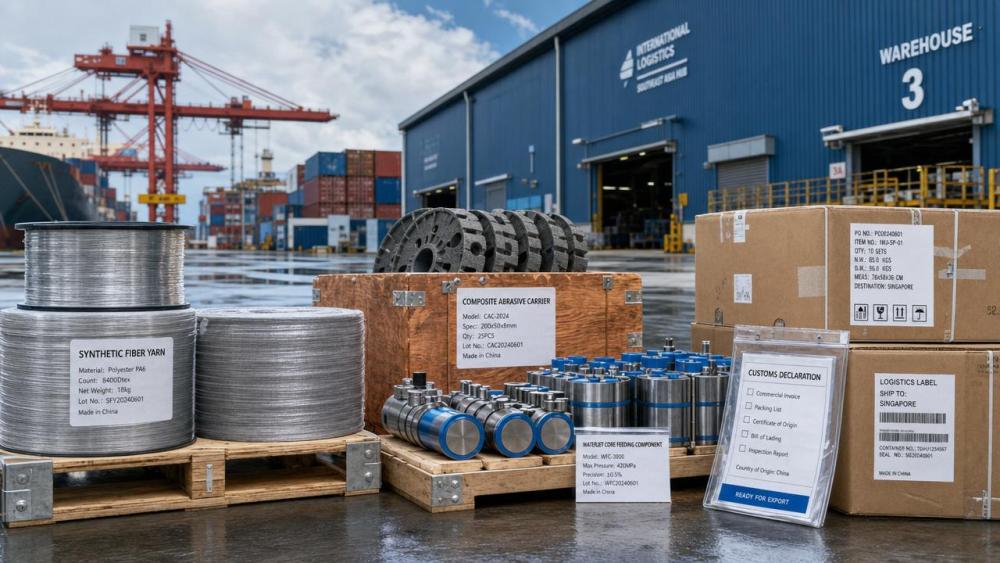
What has changed in the import rule
According to the information provided, Indonesia's Ministry of Finance Regulation No. 37 applies an additional safeguard duty to imported synthetic fiber yarn from May 22, 2026. The measure covers products including tariff code 5509.22.00 and sets the first-year duty at 324 Indonesian rupiah per kilogram.
The same yarn is described as a critical raw material for high-performance composite abrasive carriers in Abrasive Delivery Systems. The provided summary also states that Chinese abrasive manufacturers exporting to Indonesia face the risk of rising costs and customs clearance delays under this rule change, which may indirectly raise waterjet system operating costs in Southeast Asia.
Where the pressure may appear along the supply chain
Raw material cost exposure in abrasive exports
From an industry perspective, exporters of abrasive-related products into Indonesia are likely to be the first group to feel the rule change. The reason is direct: when a key upstream yarn input is subject to an added safeguard duty, the import-side cost base can rise. For businesses tied to composite abrasive carriers, this may affect pricing decisions, quotation validity, and shipment planning.
What deserves closer attention is whether product classification, shipment documentation, and supporting trade papers are fully aligned with the affected tariff scope. Even where the finished business impact is indirect, the upstream material status can influence customs review and delivery timing.
Procurement and production planning for manufacturers
Manufacturers using these yarn-based components in abrasive delivery applications may need to watch procurement cycles more closely. Analysis shows that when a measure targets a critical input rather than a final waterjet system, the operational impact often appears through material replacement timing, sourcing continuity, and inventory assumptions rather than through a single visible equipment price change.
For processing and manufacturing businesses, the practical concern is not only added cost, but also whether lead times become less predictable if customs handling slows. This makes purchase scheduling, contract terms, and component availability worth monitoring.
Logistics and customs handling may become more sensitive
Supply chain service providers, including parties involved in customs handling and cross-border delivery, may also be affected. Observably, a safeguard duty can increase the importance of correct declaration, code matching, and document consistency. Where goods are linked to covered yarn categories, even a narrow trade measure may result in additional review at the clearance stage.
For these service participants, the key issue is execution risk: delayed release, documentation queries, or the need for closer pre-shipment checks may affect delivery commitments made to downstream buyers.
End users may see indirect operating cost effects
Buyers and operators of waterjet systems in Southeast Asia are not the direct target of the rule, but they may still see indirect consequences. The provided information indicates that the higher import burden on the relevant yarn can feed into the cost structure of abrasive delivery components, which in turn may increase operating costs for waterjet systems in the region.
At this stage, it is more appropriate to understand this as a supply-chain cost transmission risk rather than a confirmed market-wide outcome. Even so, procurement teams and maintenance planners may need to watch for changes in pricing, replenishment intervals, and delivery commitments.
What companies should check now
Review tariff scope and document consistency
Companies trading into Indonesia should review whether their products, materials, or bill-of-material inputs are linked to the covered synthetic fiber yarn categories, including the tariff heading referenced in the provided information. If product declarations, invoices, packing details, or technical descriptions are inconsistent, customs handling risk may increase.
Reassess quotations and delivery commitments
Where exports to Indonesia depend on these yarn-based components, businesses may need to reassess quotation periods, delivery windows, and contract assumptions. Analysis shows that a rule already in force deserves attention not only as a cost issue but also as a delivery-management issue, especially when customs delays are mentioned in the event summary.
Track procurement and replacement timing
For buyers of abrasive delivery components, one practical point is to review purchase timing and stock assumptions. If a key material becomes more expensive or slower to clear, the immediate challenge may be continuity rather than compliance alone. Companies should therefore watch lead-time changes and supplier notices closely.
Watch for further execution details rather than assume final outcomes
The provided information confirms the measure and its effective date, but it does not provide full operational detail on enforcement practice, review procedures, or downstream treatment in specific transactions. For that reason, companies should monitor subsequent official wording, customs practice, and customer-side document requirements rather than assume a fully settled execution pattern.
Why this looks like an execution signal, not just a headline
Analysis shows that this development is more than a general trade-policy update because it touches a specific upstream material used in a specialized industrial application. The significance lies in the link between a safeguard duty on synthetic fiber yarn and the cost and timing profile of abrasive delivery components used by the waterjet sector.
It is more appropriate to understand this as an already effective rule change with practical execution implications, while also recognizing that the full market effect still needs observation. Industry participants should continue to watch for how the measure is reflected in customs handling, procurement behavior, and commercial documentation.
What this means for the market right now
At present, the most balanced reading is that Indonesia's extended safeguard treatment on imported synthetic fiber yarn has created a real compliance and cost variable for part of the waterjet abrasive supply chain. The confirmed facts support concern over higher input costs and possible clearance delays for relevant exports into Indonesia, but they do not yet support broad conclusions beyond that.
For the industry, this is best treated as a concrete rule change with immediate trade relevance and a wider regional cost implication worth tracking. The next phase of attention should center on execution details, shipment experience, and whether downstream procurement terms begin to adjust.
Basis of this article and what still needs verification
This article is based on the user-provided news title, event date, and event summary. For events of this type, commonly relevant source categories include official government notices, regulator releases, customs or trade authority information, industry association updates, standards-related documents, and reporting by authoritative trade media.
No specific official source link was provided in the input, so the exact official publication path still requires follow-up verification. Observably, the points that still merit continued monitoring include detailed enforcement language, customs execution practice, procurement document changes, tender or specification adjustments, industry feedback, and how companies actually implement responses in cross-border deliveries.
Product Recommendations
 Abrasive Delivery SystemsIndustrial Waterjet Cutters: Abrasive Costs That Erode MarginsAnalyst :5-Axis Machining Scientist
 All-Electric Press BrakesAll-Electric Servo Drives: Energy Savings vs Upgrade CostAnalyst :Precision Turning Architect
 All-Electric Press BrakesReal-Time Angle Compensation: What It Fixes and What It Doesn'tAnalyst :Precision Turning Architect
 Latest Sector NewsHigh-Strength Steel Machining: Tool Life Myths to AvoidAnalyst :Dr. Alistair Vaughn
 3D 5-Axis LaserComposite Material Cutting Without Delamination: Key MethodsAnalyst :
 Robotic Bending CellsAutomated Sheet Metal Forming: Hidden Setup Costs ComparedAnalyst :Precision Turning Architect