On May 28, 2026, Japan’s Ministry of Economy, Trade and Industry (METI) launched a dedicated fast-track certification pathway for ultrafast lasers exported to Japan—reducing JIS certification turnaround from an average of 42 working days to just 11. This initiative targets manufacturers supplying into Japanese semiconductor packaging and OLED production lines, with initial coverage focused on leading Chinese ultrafast laser equipment makers. The move signals a notable shift in regulatory efficiency for precision micro-nano processing tools entering Japan’s high-value advanced manufacturing supply chains.
Event Overview
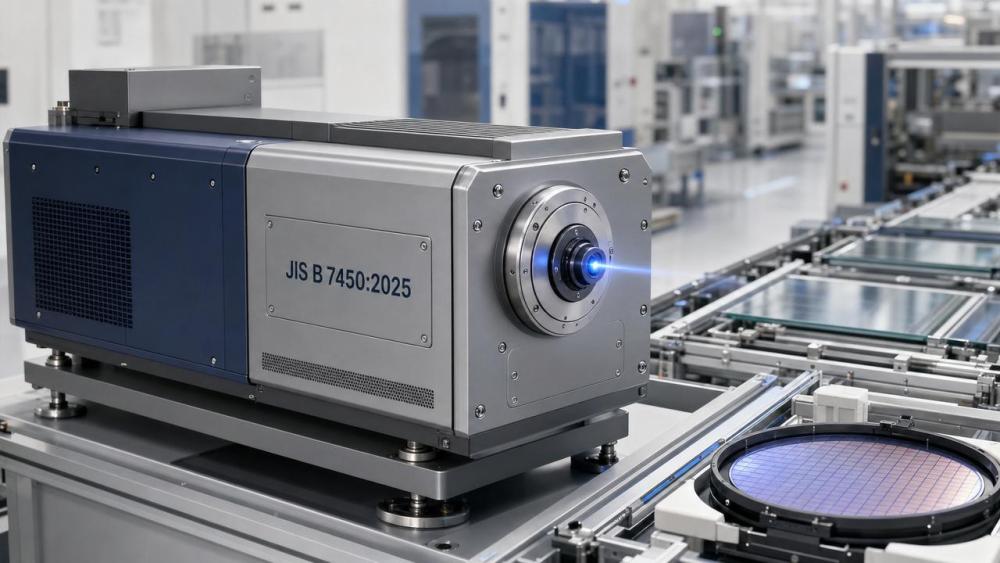
On May 28, 2026, Japan’s Ministry of Economy, Trade and Industry (METI) officially initiated the ‘Ultrafast Lasers Export Support Program’. Under this program, ultrafast lasers compliant with JIS B 7450:2025 are eligible for a dedicated JIS certification fast track. The certification cycle has been shortened from the previous average of 42 working days to 11 working days. METI also introduced bilingual (Japanese–Chinese) technical documentation pre-review services. The program explicitly includes major Chinese ultrafast laser manufacturers as beneficiaries, aiming to accelerate their integration into Japanese semiconductor packaging and OLED manufacturing supply chains.
Industries Affected by This Initiative
Direct Exporters (Laser Equipment Manufacturers)
Manufacturers exporting ultrafast lasers from China to Japan will experience reduced time-to-market for JIS-compliant models. The compressed certification window directly affects product launch timelines, contract bidding cycles, and responsiveness to Japanese OEM procurement schedules—especially in time-sensitive applications like wafer-level packaging or display repair processes.
Supply Chain Integrators (System Builders & Subsystem Suppliers)
Companies integrating ultrafast lasers into larger subsystems (e.g., micromachining workstations or automated alignment modules) may face revised qualification requirements from Japanese end customers. With faster JIS clearance available for core laser sources, integrators may need to align their own validation timelines—and potentially adjust documentation handover protocols—to match the accelerated certification cadence.
OEM Procurement & Technical Sourcing Teams (Japanese Semiconductor & Display Fabs)
Japanese fabs and equipment integrators sourcing ultrafast lasers for micro-nano processing may observe a broader and more timely selection of JIS-certified suppliers. While the fast track applies only to devices meeting JIS B 7450:2025, it does not alter functional or reliability expectations—meaning procurement teams should still verify performance consistency across batches and application-specific validation (e.g., ablation threshold stability under vacuum or thermal drift in continuous operation).
What Relevant Enterprises or Practitioners Should Focus On
Monitor official implementation guidelines and scope clarifications
METI has not yet published detailed eligibility criteria beyond compliance with JIS B 7450:2025. Exporters should track updates from Japan’s National Institute of Technology and Evaluation (NITE) or designated JIS certification bodies regarding acceptable test reports, required sample quantities, and whether modular or embedded laser systems qualify under the fast track.
Prioritize JIS B 7450:2025 alignment in technical documentation and testing
The availability of bilingual pre-review implies that documentation quality—including traceability of calibration methods, beam parameter reporting (pulse duration, M², temporal contrast), and safety interlock logic—is now a gating factor. Companies preparing for submission should allocate internal review time specifically for JIS-mandated clauses—not just IEC/EN equivalents.
Distinguish between certification acceleration and market access assurance
Obtaining JIS certification via the fast track does not guarantee procurement approval by Japanese fabs. End users often impose additional layer-2 qualifications (e.g., 3-month field trials, particle generation limits in cleanroom environments). Exporters should treat the 11-day certification as a necessary—but not sufficient—step in full supply chain onboarding.
Prepare cross-functional coordination for documentation handoff and revision cycles
With shorter certification windows, delays in internal translation, QA sign-off, or test lab scheduling become proportionally more disruptive. Teams involved in export compliance should formalize handoff checklists between R&D, regulatory affairs, and quality departments—particularly for firmware version control and optical path configuration records referenced in JIS submissions.
Editorial Perspective / Industry Observation
Observably, this fast-track mechanism is less a broad policy reform and more a targeted procedural optimization—designed to reduce administrative latency without relaxing technical or safety requirements. Analysis shows the 11-day target likely reflects streamlining of document routing and parallel review stages, rather than abbreviated testing. From an industry perspective, the inclusion of bilingual pre-review suggests METI anticipates continued growth in Chinese-origin ultrafast laser exports to Japan, particularly in sub-10 ps pulse regimes used in SiC wafer dicing and thin-film OLED patterning. Current more appropriate interpretation is that this is a signal of increasing institutional recognition of ultrafast lasers as critical infrastructure components—not just generic industrial lasers—and therefore warrants sustained attention to how similar fast-track treatments may extend to adjacent standards (e.g., JIS B 7451 for beam delivery systems).
In summary, METI’s ultrafast laser JIS fast track represents a measurable improvement in regulatory predictability for exporters targeting Japanese high-precision manufacturing sectors. It does not lower technical thresholds, nor does it replace customer-specific qualification. Rather, it compresses one defined administrative bottleneck—making timely, standards-aligned market entry more feasible for qualified suppliers. For industry participants, the initiative is best understood as an operational enabler, not a strategic shortcut.
Source: Official announcement by Japan’s Ministry of Economy, Trade and Industry (METI), released May 28, 2026. Further details—including application procedures, fee structure, and list of authorized certification bodies—are pending publication by NITE and remain under observation.
Product Recommendations
 Abrasive Delivery SystemsIndustrial Waterjet Cutters: Abrasive Costs That Erode MarginsAnalyst :5-Axis Machining Scientist
 All-Electric Press BrakesAll-Electric Servo Drives: Energy Savings vs Upgrade CostAnalyst :Precision Turning Architect
 All-Electric Press BrakesReal-Time Angle Compensation: What It Fixes and What It Doesn'tAnalyst :Precision Turning Architect
 Latest Sector NewsHigh-Strength Steel Machining: Tool Life Myths to AvoidAnalyst :Dr. Alistair Vaughn
 3D 5-Axis LaserComposite Material Cutting Without Delamination: Key MethodsAnalyst :
 Robotic Bending CellsAutomated Sheet Metal Forming: Hidden Setup Costs ComparedAnalyst :Precision Turning Architect