Why do sheet metal bending defects matter so much in daily production?
Sheet metal bending looks simple until a part misses angle, splits at the edge, or waves along the flange.
Those defects are not minor cosmetic issues. They affect assembly fit, repeatability, scrap rate, and downstream welding or fastening quality.
In real workshops, the biggest losses often come from small deviations repeated across large batches.
That is why sheet metal bending is closely watched in aerospace, EV structures, cabinets, brackets, enclosures, and precision formed components.
AMTS follows this topic as part of a wider precision chain.
Laser cutting quality, press brake control, material behavior, and angle compensation all influence whether a bend stays stable from first part to last.
A practical way to reduce defects is to stop treating springback, cracking, and wrinkling as separate surprises.
More often, they are linked to the same process chain: material selection, cut edge condition, tooling geometry, bending sequence, and machine setup.
When does springback become a real problem instead of a normal correction?
Some springback is normal in sheet metal bending.
The problem starts when the rebound is inconsistent, hard to predict, or large enough to push parts outside tolerance.
Springback happens because the metal tries to recover elastically after the forming force is removed.
Higher yield strength materials usually show stronger rebound.
That is why AHSS, stainless steel, and some aluminum grades are more challenging than mild steel.
Thickness variation also matters. Even small changes in coil or sheet properties can shift the final bend angle.
In practice, springback tends to increase under these conditions:
- Large die openings relative to material thickness
- Large inside bend radii
- High-strength or work-hardened material
- Insufficient penetration during air bending
- Poorly calibrated angle measurement systems
The first response is not always more tonnage.
A better response is to check material data, actual thickness, punch radius, die width, and whether the part is air bent or bottom bent.
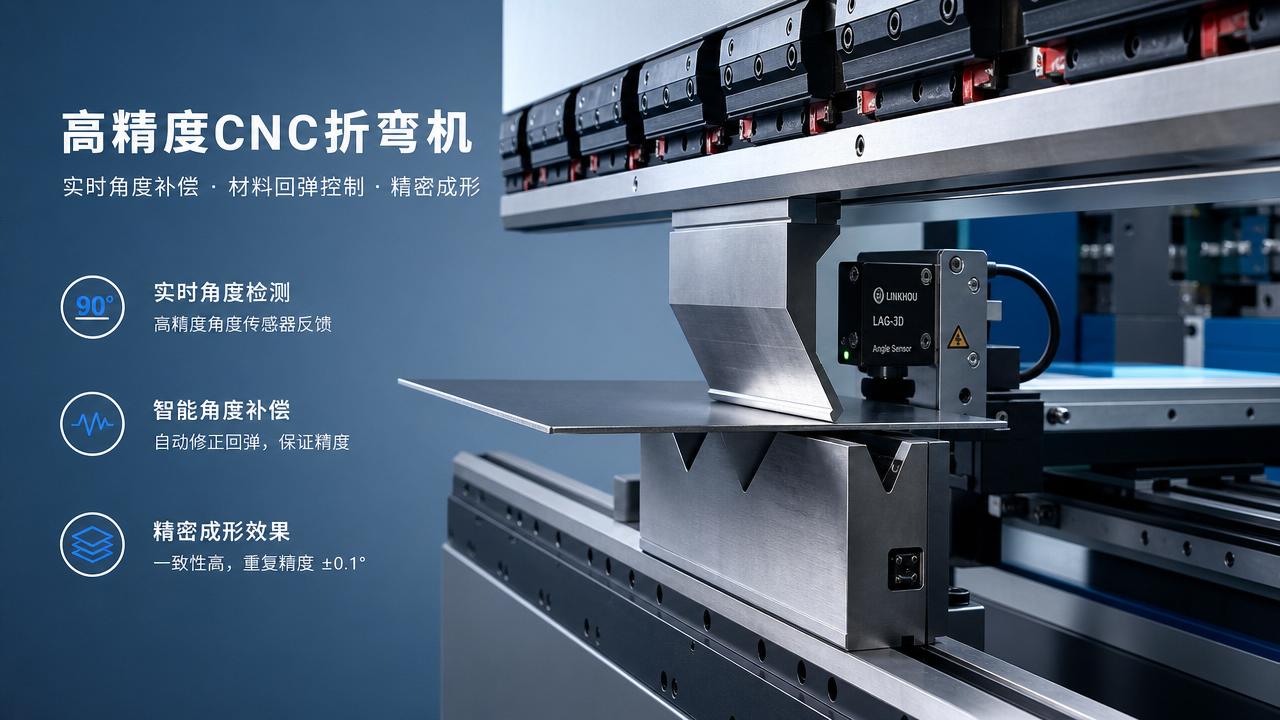
Modern CNC press brakes reduce risk through real-time angle correction.
That matters even more where tight tolerances are common, such as battery trays, rail components, and aircraft brackets.
A quick reference before adjusting the machine
Before changing several variables at once, it helps to isolate the likely cause.
What usually causes cracking in sheet metal bending?
Cracking is often treated as a bending problem alone, but the root cause may begin much earlier.
The outer surface of the bend stretches during forming.
If that tensile strain exceeds the material limit, a crack starts.
This becomes more likely when the inside bend radius is too tight for the material grade and thickness.
Cut edge condition matters more than many expect.
A rough laser-cut edge, a punched burr, or a micro notch can act as a crack initiator during sheet metal bending.
This is especially true for high-strength steel and age-hardened aluminum.
Grain direction is another common factor.
Bending across the rolling direction often improves formability compared with bending parallel to it.
If cracks keep appearing, review these points:
- Is the inside radius smaller than the material recommendation?
- Was the blank cut with clean, low-damage edges?
- Is the bend line too close to a hole or notch?
- Does the bending direction fight the grain flow?
- Has the material already been work-hardened by earlier operations?
In advanced forming environments, this is where process integration becomes valuable.
AMTS often highlights how laser cutting, tool design, and press brake programming should be reviewed together, not in isolation.
Wrinkling during bending: a tooling issue, a design issue, or both?
Wrinkling usually forms where the material is pushed into compression and loses stability.
It appears more often in thin sheet, wide flanges, large unsupported areas, or parts with weak local stiffness.
So yes, tooling can cause it, but part geometry can invite it as well.
A common mistake is focusing only on tonnage or bend angle.
Wrinkling is often about material flow control.
If the sheet is not adequately supported, the flange may buckle before the bend fully forms.
If the blank shape is poor, even precise tooling will struggle.
More stable results usually come from a combination of:
- Appropriate flange length for the chosen tooling
- Better support near the bend line
- Controlled forming sequence on complex parts
- Die selection that matches thickness and geometry
- Blank layouts that reduce local compression buildup
For thin-gauge enclosures and EV battery covers, wrinkling can also affect sealing and visual quality, not just dimension.
How do you tell whether the problem comes from material, tooling, or setup?
The fastest diagnosis is usually comparative, not theoretical.
If one batch runs well and the next does not, material variation is a strong suspect.
If all batches fail at the same location, geometry or tooling deserves closer attention.
If the first parts are correct and later parts drift, setup stability or tool wear may be involved.
A disciplined check sequence keeps troubleshooting efficient:
- Confirm material grade, thickness, hardness, and rolling direction.
- Inspect cut edges, burrs, notch areas, and hole proximity.
- Verify punch radius, die width, and tool alignment.
- Review bend method, penetration depth, and compensation values.
- Measure parts across the run, not only the first sample.
This approach is increasingly relevant in smart manufacturing lines.
As AMTS tracks, automated cells and servo press brakes can hold excellent repeatability, but only when upstream data stays reliable.
Digital control does not remove the need for physical process discipline.
Which preventive actions reduce scrap fastest in sheet metal bending?
The most effective improvements are usually simple, measurable, and repeatable.
Trying to fix defects only at the machine often wastes time.
A stronger method is to build a prevention routine around known defect triggers.
Practical controls worth standardizing
- Set material-specific bend libraries instead of one default program.
- Record actual springback values by grade and thickness.
- Match cut quality to forming requirements, especially near bend lines.
- Use minimum inside radius rules for each alloy family.
- Check first-off parts and mid-run samples, not only final output.
- Keep tooling surfaces clean and alignment verified.
Where tolerances are tight, feedback systems help a lot.
Real-time angle measurement, servo control, and compensation logic reduce trial-and-error, especially in mixed-material production.
Still, the bigger gain often comes from linking process knowledge across cutting, bending, and inspection.
What is the smartest next step if springback, cracking, or wrinkling keeps returning?
Recurring defects usually mean the process window is too narrow or poorly defined.
Instead of adjusting one parameter each shift, create a stable reference using the same material, tooling, and measured bend result.
Then compare failed parts against that reference in a structured way.
For sheet metal bending, the key is not only knowing what defect appeared.
It is knowing where in the process chain the defect was introduced.
Springback points to elastic recovery and control limits.
Cracking points to excess strain, edge damage, or poor bendability.
Wrinkling points to compression instability and support issues.
If that logic is built into setup sheets, tooling choices, and inspection records, scrap usually drops faster than expected.
A useful next move is to review one recurring part family, compare defect patterns by material and tool combination, and update bending standards from actual shop data.
That is where sheet metal bending becomes more predictable, and where precision manufacturing starts to scale with fewer surprises.
Product Recommendations
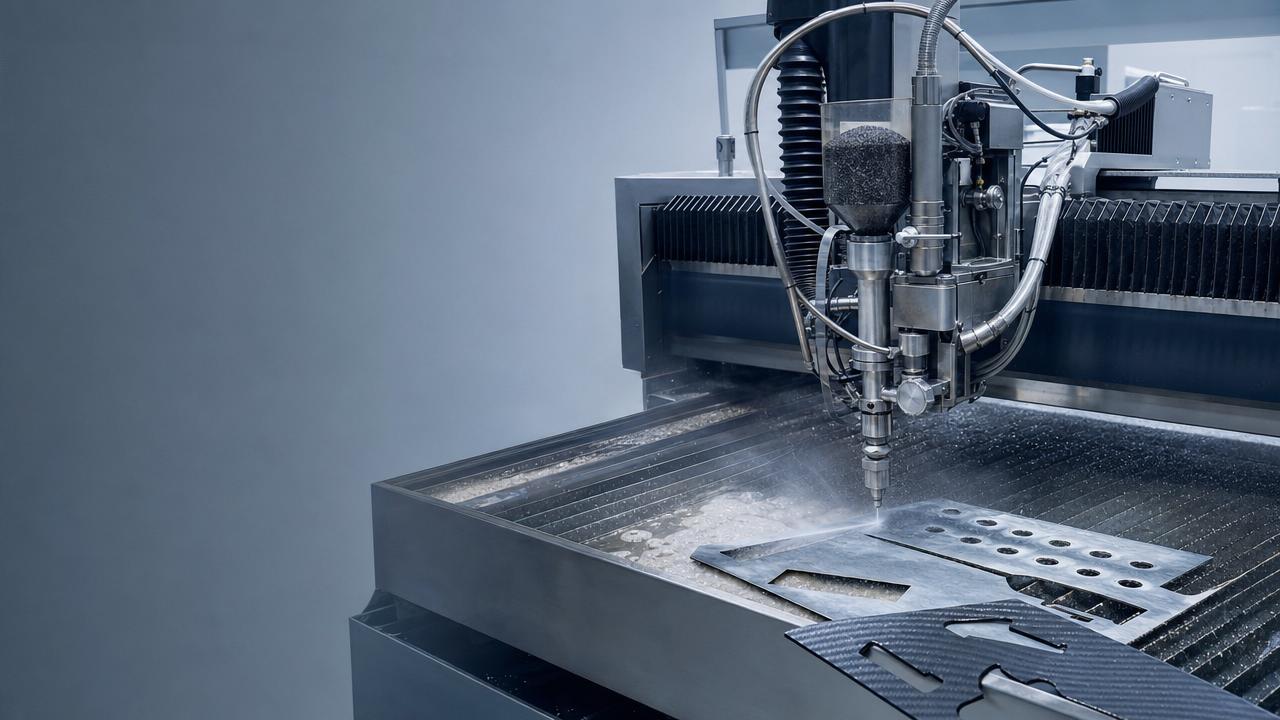
 Abrasive Delivery SystemsIndustrial Waterjet Cutters: Abrasive Costs That Erode MarginsAnalyst :5-Axis Machining Scientist
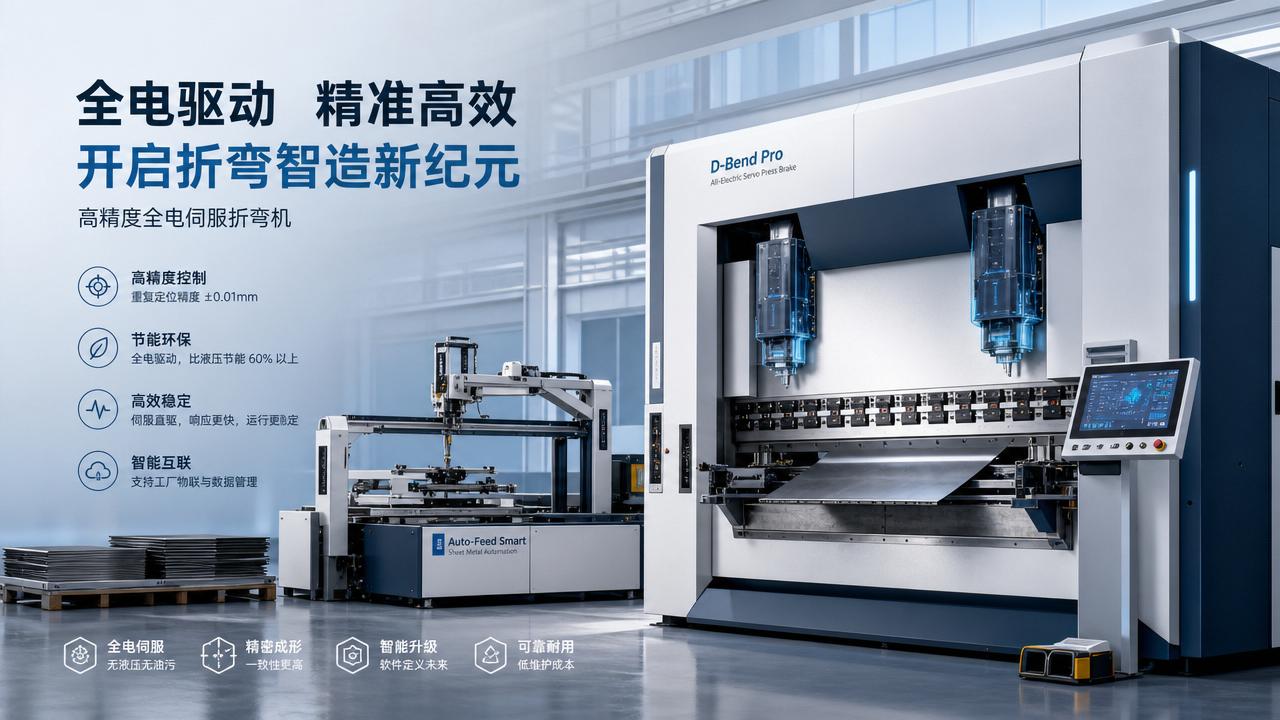
 All-Electric Press BrakesAll-Electric Servo Drives: Energy Savings vs Upgrade CostAnalyst :Precision Turning Architect
 All-Electric Press BrakesReal-Time Angle Compensation: What It Fixes and What It Doesn'tAnalyst :Precision Turning Architect
 Latest Sector NewsHigh-Strength Steel Machining: Tool Life Myths to AvoidAnalyst :Dr. Alistair Vaughn
 3D 5-Axis LaserComposite Material Cutting Without Delamination: Key MethodsAnalyst :
 Robotic Bending CellsAutomated Sheet Metal Forming: Hidden Setup Costs ComparedAnalyst :Precision Turning Architect